Last updated: November 14, 2026
Quick Answer: A thermoblock espresso machine usually heats up faster, while a boiler machine usually gives steadier brew temperature and stronger steam. Choose thermoblock for speed and light milk work; choose boiler for more consistent espresso and better steam power. This guide to Thermoblock vs Boiler Espresso Machines: Heating Speed, Steam Power, and Temperature Consistency settles heating speed, steam behavior, temperature consistency, and who should skip each one.
Key Takeaways
- Thermoblock systems use a fast-heating water path, often with an aluminum casting and an embedded stainless tube, so they warm quickly and suit small daily drinks.
- Boiler machines store hot water in a heated chamber, which usually helps with stable brew temperature and stronger, drier steam for milk drinks.
- The real trade-off is not “good vs bad.” It is speed and compactness versus thermal mass and repeatable heat.
- If you pull back-to-back espresso shots and steam milk often, the boiler design is the safer pick.
- If you want a quick morning shot and do not want a long warm-up, thermoblock is the simpler fit.
Our Top 3 Picks at a Glance
- #1 Best Overall: Boiler espresso machine — best for steady espresso and milk drinks when you care more about consistency than start-up speed.
- #2 Best Budget Pick: Thermoblock espresso machine — best for a smaller footprint and quicker heat-up, especially if you make one or two drinks at a time.
- #3 Best Heavy-Duty / Upgrade Pick: Boiler espresso machine with stronger steam capacity — best for frequent lattes, cappuccinos, and back-to-back use.
| Product / Option | Best For | Core Spec | Standout Feature | Action |
|---|---|---|---|---|
| Boiler espresso machine | Home baristas who want steadier brew temp and better milk steaming | Heated water reservoir with high thermal mass | More stable heat across shots | Check current price at Amazon, Walmart, or the brand site |
| Thermoblock espresso machine | Quick drinks and limited counter space | Instant heating espresso block with a flow meter in many designs | Fast warm-up and quick shot-ready response | Check current price at Amazon, Best Buy, or the brand site |
| Boiler machine with stronger steam system | Frequent milk drinkers who want drier steam | Boiler-based steam path | Better steam reserve for foam texture | Check current price at Amazon, Walmart, or the brand site |
Thermoblock vs boiler espresso machine: what actually changes?
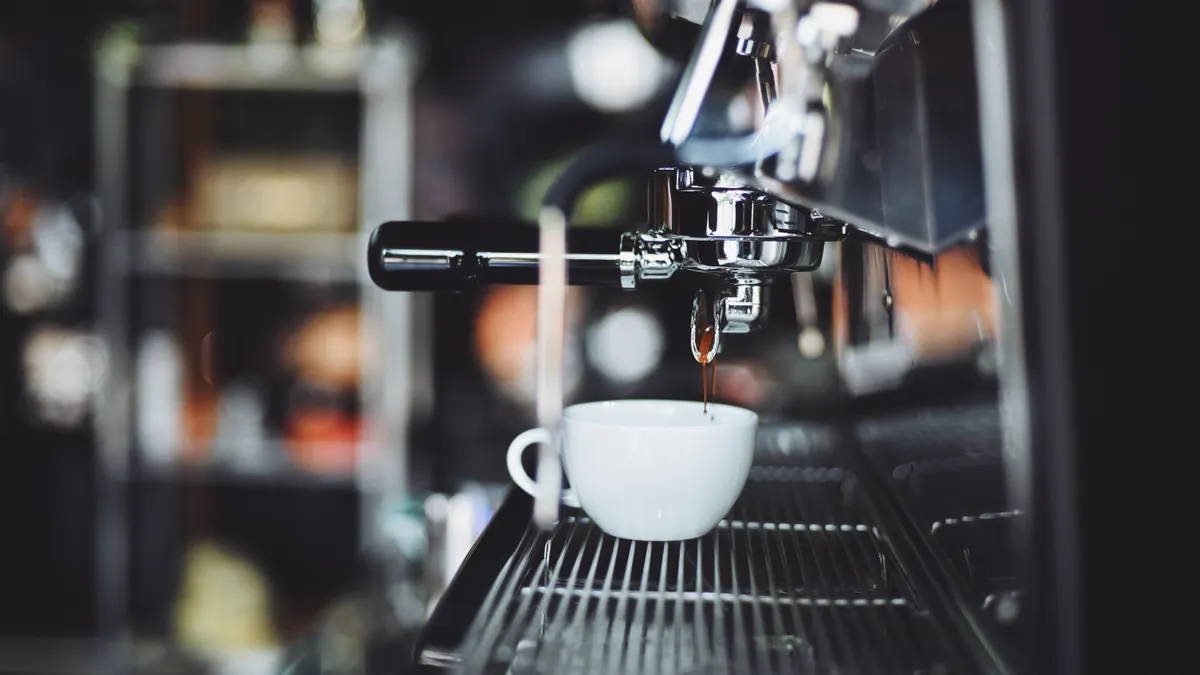
A thermoblock wins on warm-up speed; a boiler wins on thermal stability and steam reserve. That is the whole decision in plain English, and it matters because the heating system shapes how the machine behaves before, during, and after extraction.
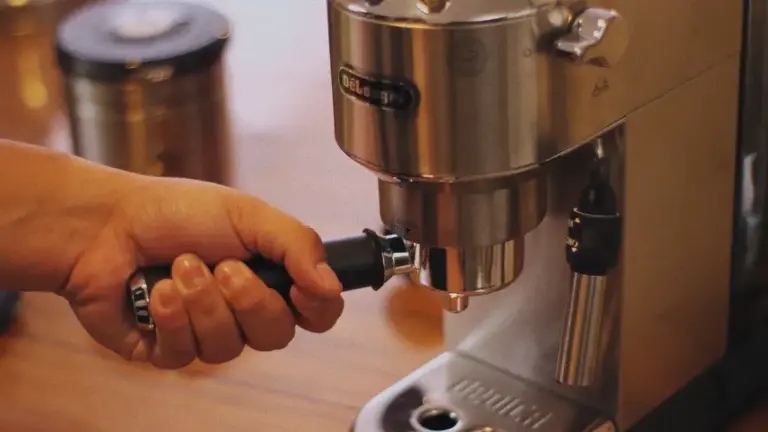
Picture this: you press the power button before breakfast and want espresso before the kettle would even be ready. A thermoblock suits that use case because it heats incoming water on demand through a compact water path. In many home machines, that means a shorter wait than a boiler, which may need several minutes to heat a larger water mass.
- Thermoblock: water moves through a heated block or thermocoil path, often built from aluminum casting with an embedded stainless tube.
- Boiler: water sits in a heated chamber with more thermal mass, which smooths temperature swings.
- Flow meter: many thermoblock machines use one to measure water flow and control dose more tightly.
The catch is simple. Fast heating does not automatically mean better steam or steadier espresso. A thermoblock can be quick and convenient, but a boiler usually holds its heat better during repeated shots and milk steaming.
For the best overview of machine behavior, the heating system matters more than the badge on the front panel. In practice, temperature consistency is usually easier to hold with a boiler, while startup speed usually favors thermoblock.
Why thermoblock heating feels so fast
A thermoblock feels fast because it heats a small amount of water as it passes through the block, instead of waiting for a full tank of water to come up to boiler temperature. That is why these machines are often called an instant heating espresso block design.
Picture this: you want a single shot before work, and you do not want to wait through a long warm-up. The thermoblock is built for that exact morning routine, especially in compact machines where counter space matters. For a one-cup routine, the advantage is usually about convenience rather than raw output.
Here’s the catch:
- Fast start-up helps when you only make one drink.
- Smaller heated volume can mean less lag between button press and hot water.
- Thermocoil water pathway designs often reduce the wait before extraction.
A thermoblock is not magic, though. Its weak spot is that the water path and heating cycle can be less forgiving during long runs. If the machine’s control is basic, temperature can drift more between one shot and the next than it would with a boiler’s larger thermal buffer.
Who should skip this: people who pull several espresso shots in a row and steam milk for multiple drinks. A boiler machine fits that pattern better because it is built around thermal mass, not just speed.
Why boiler machines stay steadier
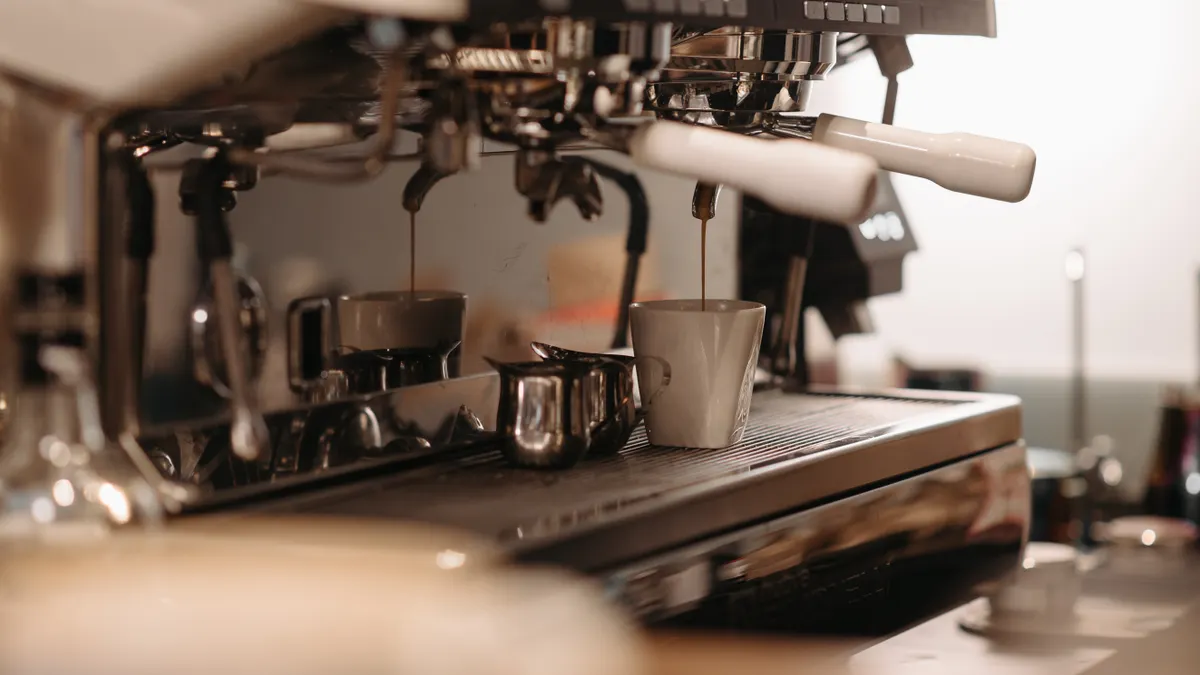
A boiler machine wins on consistency because it keeps a larger body of water at working temperature. That extra mass resists sudden drops when you start extraction or open the steam wand, which is why boiler machines are the safer choice for repeatable espresso.
Picture this: you’ve got two cappuccinos to make, and you care that the second shot tastes like the first. A boiler’s main advantage is not drama; it is the quiet stability that keeps the brew water from swinging around. That steadiness matters most when you move between brewing and steaming in the same session.
- More stable heat during back-to-back shots.
- Better steam reserve for milk texturing.
- Less dependence on rapid cycling to chase temperature.
The downside is just as real. Boilers usually take longer to get ready, and some machines spend more time warming the whole system than a thermoblock does. That extra wait is the price of temperature consistency and stronger steam performance.
For milk drinks, the gain is practical: stronger steam makes texture easier to control, and the boiler’s thermal buffer helps the machine recover after each use. That is why many buyers accept the longer warm-up.
Who should skip this: anyone who wants a quick single espresso and hates waiting for warm-up. A thermoblock machine fits that person better because it is designed for speed, not stored heat.
The honest side-by-side
A thermoblock is better for speed; a boiler is better for repeated drinks, steam strength, and steadier extraction. The table below puts the trade-offs in one place without pretending either system is perfect.
| Criteria | Thermoblock | Boiler | Winner for [condition] |
|---|---|---|---|
| Warm-up time | Heats water on demand through a compact block | Needs time to bring stored water up to temp | Thermoblock for quick first cup |
| Brew temperature stability | Can vary more with flow and cycling | Usually steadier because of higher thermal mass | Boiler for repeat shots |
| Steam power | Often weaker and less dry | Usually stronger and drier | Boiler for milk drinks |
| Shot-to-shot rhythm | Good for one or two drinks | Better for multiple drinks in a row | Boiler for back-to-back use |
| Counter footprint | Often smaller | Often larger | Thermoblock for tight kitchens |
| Water path | Thermocoil or heated block with embedded tube | Heated chamber | Thermoblock for compact design |
| Control complexity | May rely on flow meter and cycling logic | Usually simpler heat storage behavior | Boiler for predictable heat |
| Morning convenience | Faster to get moving | Slower start but steadier once ready | Thermoblock for rushed mornings |
| Milk texture quality | Can be adequate, but less forceful | Better for microfoam and steam dry quality | Boiler for cappuccino lovers |
The table is blunt for a reason. If you value speed and size, thermoblock makes sense. If you care more about steam power and temperature consistency, boiler is the better tool.
For buyers comparing models across a tighter budget, this difference also shows up in how the machine fits a kitchen. Smaller machines often use thermoblock to save space; larger machines more often use a boiler to prioritize stability.
What thermoblock espresso machines do well — and where they fall short
A thermoblock wins for the person who wants espresso fast, uses modest amounts of milk, and would rather save counter space than chase café-style steam. The design makes sense because it heats only the water you need, right when you need it.
Picture this: you make one latte in the morning and an espresso after dinner. You do not want a machine that dominates the counter or asks for a long heat-up every time you turn it on.
Strengths:
- Quick start-up for single drinks.
- Smaller footprint in many home kitchens.
- Good fit for light use, especially if you drink straight espresso.
Weaknesses:
- Less steam reserve than a boiler, so foam work can feel slower.
- Temperature can be less settled during long sequences of shots.
- Some designs depend heavily on the way the flow meter and control logic manage heating, so performance can feel more variable by model.
Who should skip this: people who want café-style milk drinks every day or who serve more than one person at breakfast. A boiler machine is the better match because it handles steam dry quality and repeated use more calmly.
What boiler espresso machines do well — and where they fall short
A boiler machine wins for anyone who wants a steadier cup and stronger milk steaming, especially if espresso is only part of the routine. The stored-hot-water approach gives the machine a thermal cushion that a thermoblock usually cannot match.
Picture this: you steam milk, pull another shot, then steam again without waiting around for the machine to recover. That is where the boiler’s thermal mass becomes the thing you notice most.
Strengths:
- More even temperature across shots.
- Stronger steam power for milk drinks.
- Better support for a workflow that mixes brewing and steaming.
Weaknesses:
- Longer warm-up before the first cup.
- Usually larger and heavier than thermoblock machines.
- Can be overkill if you only want a fast espresso now and then.
Who should skip this: a solo espresso drinker with a cramped kitchen and little patience for warm-up. A thermoblock machine is a better fit because it gets to work faster and uses less space.
When the verdict flips
A thermoblock can beat a boiler in a few real situations, and pretending otherwise would be lazy. The winner changes when your routine changes.
Picture this: one household member drinks espresso, another drinks drip coffee, and the machine only gets used once a day. A thermoblock may be the smarter buy because the boiler’s extra thermal capacity never gets used enough to justify the slower start.
- You mostly drink straight espresso. Thermoblock makes more sense because steam power matters less.
- You need the fastest possible first cup. Thermoblock wins by design.
- You make several milk drinks in a row. Boiler flips the result because it keeps heat and steam steadier.
- You care most about repeatable shots. Boiler wins because consistency is its main advantage.
The key is not the label on the box. It is your actual routine. If milk drinks are rare, a thermoblock is often enough. If you want consistent espresso and real steam authority, the boiler earns its place.
So which one should you choose?
Choose thermoblock if you want fast heat-up, a smaller machine, and mainly make one espresso or one milk drink at a time. Choose boiler if you want steadier temperature, stronger steam, and a better workflow for back-to-back drinks. Neither if you want the shortest warm-up and the strongest steam in the same machine without compromise.
That is the cleanest answer for most home buyers. A thermoblock is a convenience-first machine. A boiler is a heat-stability-first machine.
For a broader map of machine types, the guide to home espresso boiler types belongs alongside this comparison because the heating system changes how the whole machine behaves.
Is thermoblock worse than a boiler for espresso?
A thermoblock is usually less consistent than a boiler for espresso, but not always the worse choice for the person using it. It can be the better choice for fast single drinks, compact kitchens, and lighter milk use. A boiler usually does better when you want steadier brew temperature, stronger steam, and repeatable results across several shots.
How fast does a thermoblock machine heat up?
A thermoblock machine heats up faster than a boiler machine because it warms water on demand instead of heating a larger stored volume. The exact wait depends on the model, the heater design, and how the machine manages flow through its thermocoil or block. For many buyers, that faster start is the main reason to choose it. For a closer look at sizing and setup, compare small espresso machines and the page on boiler espresso machines.
For an authoritative overview of how espresso temperature and brew ratio affect extraction, the Specialty Coffee Association’s resources are a useful reference, and the National Coffee Association also provides brewing basics that help explain why consistency matters.
Drafted with AI; not yet reviewed by a person.