Choose a semi-automatic if you want to control grind, dose, and tamp yourself and don’t mind a few extra minutes per drink. Choose a super-automatic if you want to press one button for a finished drink and are willing to pay more up front for that convenience. The right pick depends on daily cup count, counter space, budget, and how much cleanup you’ll tolerate — not on which one is “better.”
- A semi-automatic uses a pump for pressure, but you still grind, dose, and tamp (or buy a model with a built-in grinder that does the grinding step for you).
- A super-automatic grinds, doses, brews, and often froths milk automatically from whole beans.
- Super-automatics typically cost more up front because the grinder is built into the machine.
- If a built-in grinder fails, the repair is usually billed as one combined service call, not a separate grinder fix.
What’s the actual difference between the two?
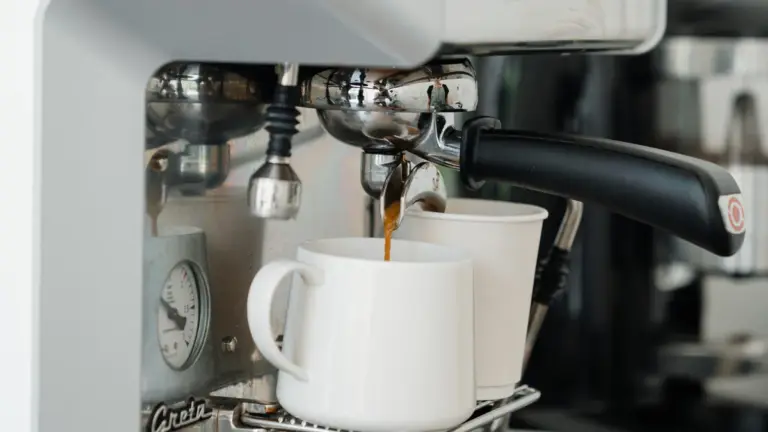
A semi-automatic espresso machine uses an electric pump to hold brew pressure steady, but the person using it still grinds the beans (unless the model has a built-in grinder, like the Breville Barista Express), doses the grounds, and tamps the puck before locking in the portafilter. The Breville Barista Express (BES870) is a semi-automatic with an integrated grinder, measuring 313 × 338 × 407 mm — compact enough for a standard counter, according to Breville’s own instruction manual.
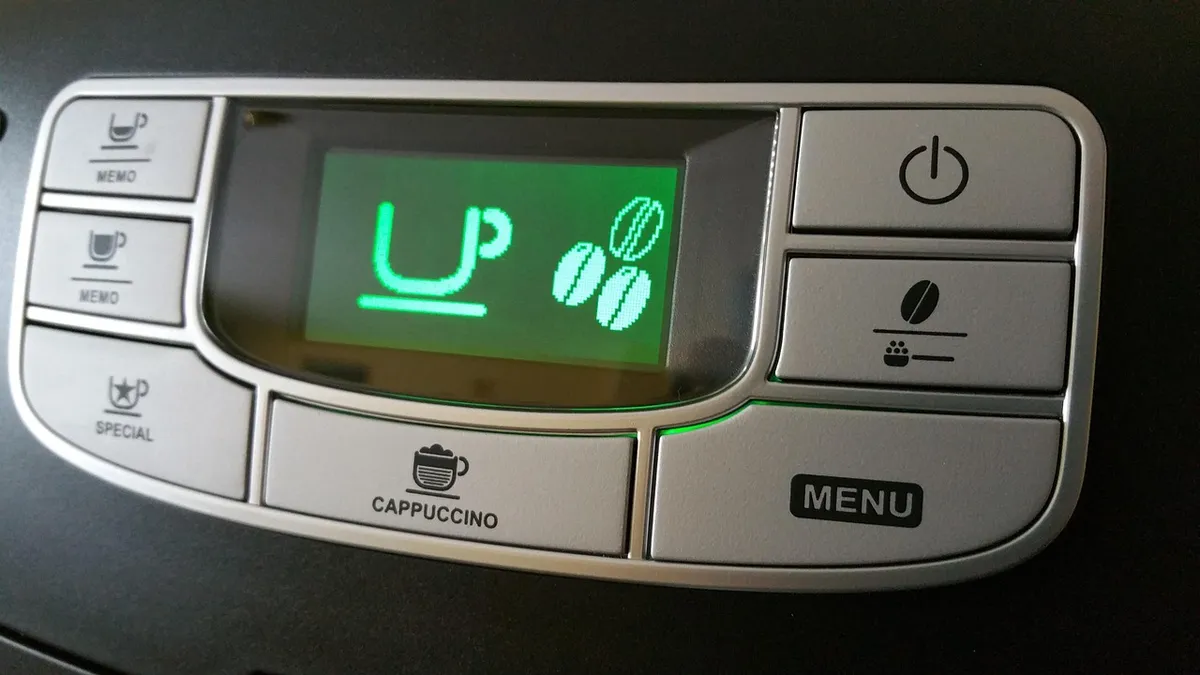
A super-automatic goes further: it grinds beans from a hopper, doses automatically, brews, and in many models steams or froths milk, all from one button. The Gaggia Anima Prestige is a published example — 8.7 × 16.9 × 13.4 inches and 25 lb, with a 1.8-liter water reservoir and an 8.8-ounce bean hopper, per Gaggia North America’s own product page. You load beans and water, and the machine handles the rest.
How many drinks a day should tip the decision?
If you make one to four drinks a day and want to learn the process, a semi-automatic rewards the practice — each shot gets more consistent as your grind, dose, and tamp technique improves. If you’re making espresso mainly for convenience, or multiple people in the house want drinks without thinking about technique, a super-automatic removes those variables entirely, at the cost of paying for that automation whether you use it fully or not.
Neither choice is about being a “serious” coffee drinker versus a casual one. Plenty of daily espresso drinkers prefer a super-automatic specifically because they don’t want the morning routine to involve dialing in a grinder.
What about counter space and daily cleanup?
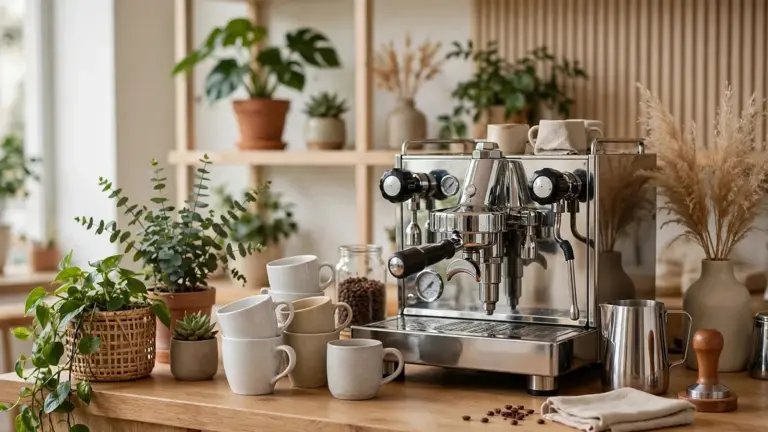
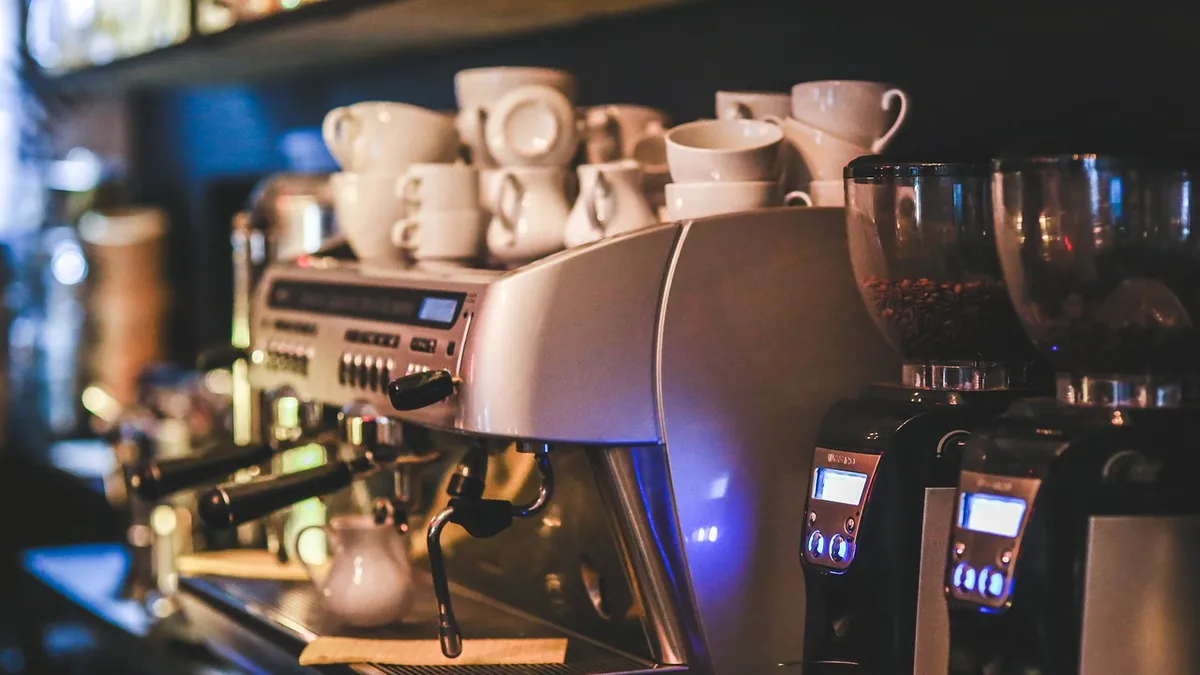
A semi-automatic machine without a built-in grinder is usually the slimmer option, but you need to budget separate counter space for a standalone grinder next to it. A semi-automatic with an integrated grinder, like the Breville Barista Express, combines both in one footprint but is still a manual-workflow machine day to day.
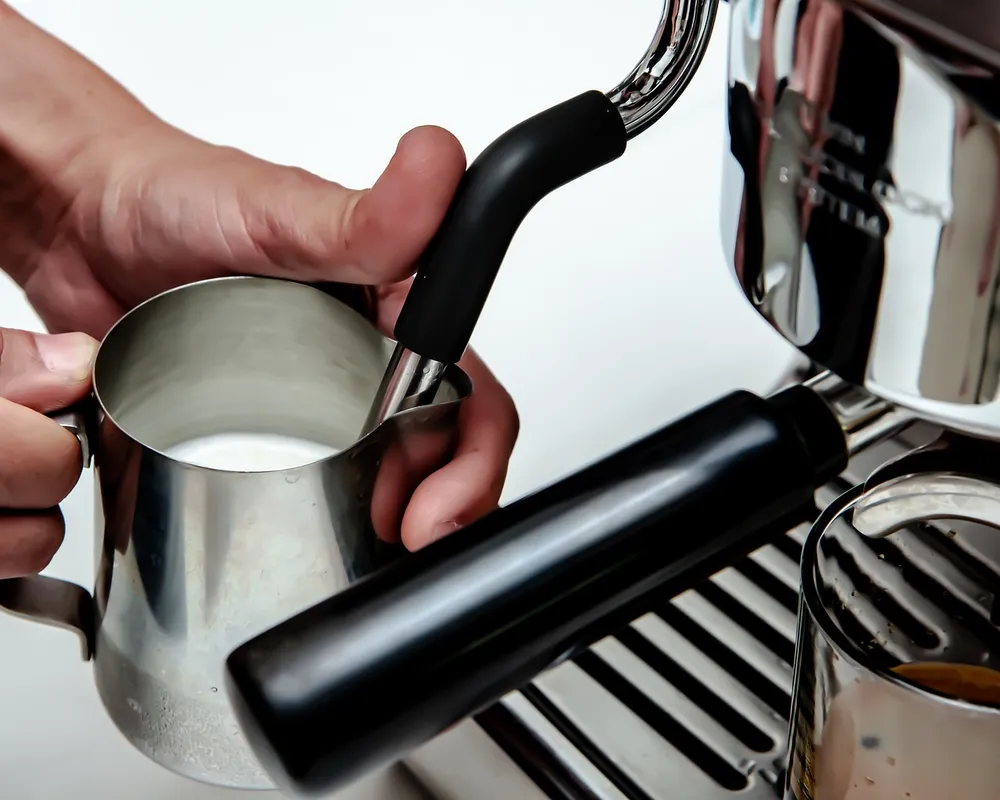
A super-automatic needs room for its water reservoir, bean hopper, and often a drip tray and waste-grounds bin, all built into one case — the Gaggia Anima Prestige’s listed dimensions above give a sense of that footprint. Cleanup differs too: a semi-automatic requires you to rinse the portafilter, wipe the steam wand, and empty the drip tray by hand after every drink. Many super-automatics run an automatic rinse cycle on power-down, which handles part of that routine without you doing it manually — though the bean hopper, water tank, and drip tray still need regular manual cleaning on both types.
What happens when something breaks?
This is where the built-in grinder changes the long-term picture, not just the buying price. According to flat-rate pricing published by repair shop iDrinkCoffee, a superautomatic or all-in-one machine repair is typically billed as one combined service call, priced in the $300–$400 range for machines under seven years old, regardless of whether the fault is in the grinder, the brew unit, or the boiler — because the components are integrated into one housing.
A semi-automatic and a standalone grinder are two separate repair paths instead. iDrinkCoffee’s pricing lists a single-boiler machine repair at $250 and a grinder-only repair at $125–$250 depending on the model. A separate grinder-repair specialist, SoCal Coffee Repair, lists a standalone grinder diagnostic visit at $145 and burr replacement at $180–$320. The trade-off: a semi-automatic setup can mean paying for two separate repairs over its life, but each part can usually be fixed or replaced without touching the other. For a deeper look at this specific trade-off, see the built-in vs. separate grinder repair-cost comparison.
Decision table: which one fits your routine?
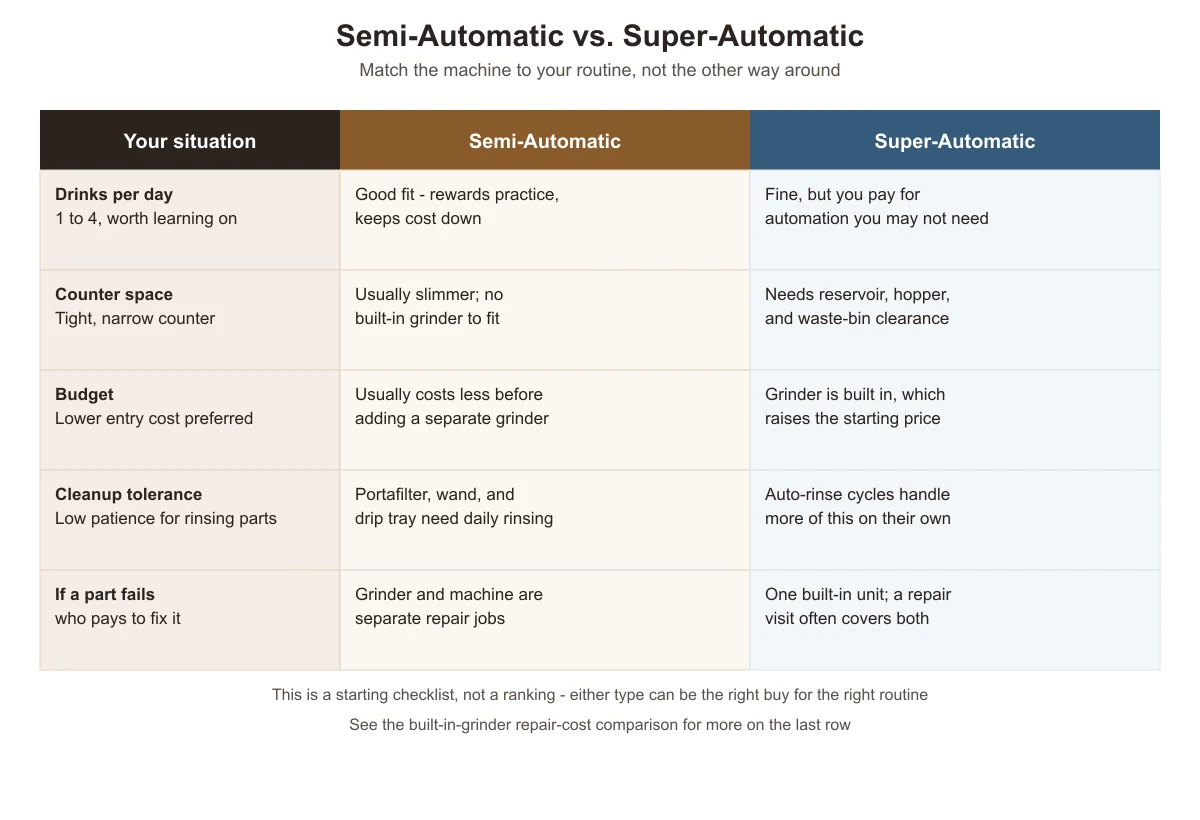
The graphic below is a quick-reference version. The table underneath holds the same comparison in text.
| Your situation | Semi-Automatic | Super-Automatic |
|---|---|---|
| Drinks per day | Good fit for 1–4 drinks; rewards practice and keeps cost down | Fine for any volume, but you pay for automation you may not need at low volume |
| Counter space | Usually slimmer unless paired with a separate standalone grinder | Needs room for reservoir, hopper, and waste-grounds bin |
| Budget | Usually costs less before adding a separate grinder | Grinder is built in, which raises the starting price |
| Cleanup tolerance | Portafilter, wand, and drip tray need daily hand rinsing | Auto-rinse cycles handle part of this; tank, hopper, and tray still need manual cleaning |
| If a part fails | Grinder and machine are typically separate repair jobs ($125–$320 for the grinder alone, per published shop pricing) | Usually one combined repair call ($300–$400, per published flat-rate pricing) |
For the full four-factor buying framework this decision fits into, see the home espresso machine buying guide. If you’re weighing a manual lever machine against a semi-automatic specifically, the manual lever vs. semi-automatic comparison covers that beginner decision. And if a pod machine is also on your list, espresso machine vs. Nespresso walks through the cost-per-cup math.
Frequently asked questions
Does a super-automatic make better espresso than a semi-automatic?
Not inherently. A super-automatic’s grinder and dose settings are fixed by the manufacturer’s calibration, while a semi-automatic lets you adjust grind size, dose, and tamp pressure shot by shot. A well-dialed-in semi-automatic can outperform a super-automatic in a skilled user’s hands, but a super-automatic is more consistent for someone who doesn’t want to adjust anything.
Can I upgrade a semi-automatic later by adding a better grinder?
Yes. A semi-automatic machine’s grinder (if it has one built in) or your standalone grinder can usually be replaced independently of the machine itself, as long as the new grinder physically fits your counter. This is one practical advantage of keeping the grinder and machine separate.
Do super-automatics need descaling like other espresso machines?
Yes. Any machine that heats and passes water through internal plumbing, including super-automatics, needs regular descaling based on your water hardness. See the descaling frequency guide for a schedule based on your water’s hardness.
Is a super-automatic a good choice for a first-time espresso drinker?
It can be, if your priority is a finished drink with minimal routine. If you want to learn how grind size, dose, and tamp affect the shot, a semi-automatic gives you that feedback directly, while a super-automatic’s fixed internal settings hide those variables from you.
Sources
- Breville official instruction manual, Barista Express BES870 — breville.com
- Gaggia North America, Anima Prestige product page — gaggia-na.com
- iDrinkCoffee, flat-rate repair pricing — idrinkcoffee.com
- SoCal Coffee Repair, grinder repair service pricing — socalcoffee.repair
espressomachinesforhome.com Editorial Team. Last updated: November 13, 2026.