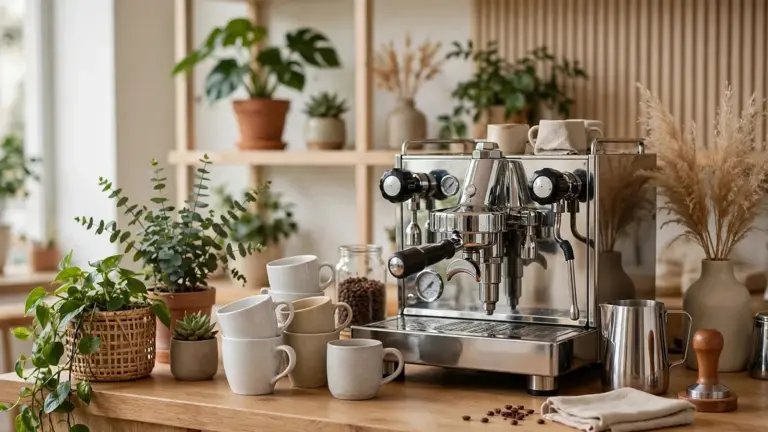
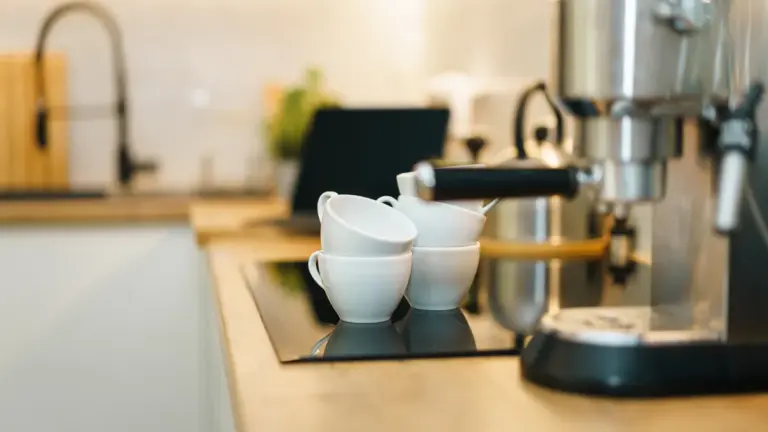
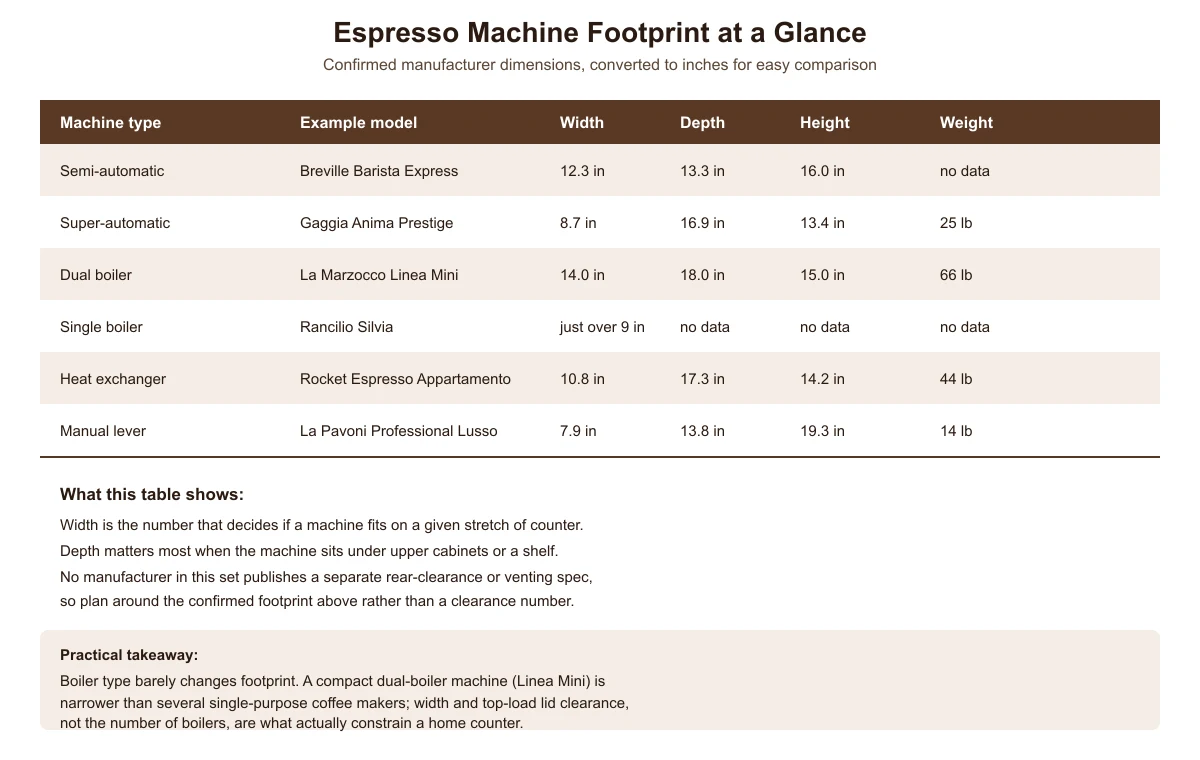
Most home espresso machines need 8 to 14 inches of counter width and 14 to 18 inches of depth, based on confirmed manufacturer dimensions across six common machine types. Boiler type (single, dual, or heat exchanger) barely changes the footprint. What actually limits a home counter is width, top-load lid clearance for refilling, and whether the machine sits under upper cabinets.
Key takeaways
- Width is the number that decides if a machine fits a given stretch of counter, not boiler type.
- A compact dual-boiler machine can be narrower than a single-boiler one; use the actual spec sheet, not assumptions based on “more boilers = bigger.”
- No manufacturer in this comparison publishes a separate rear-clearance or venting inch figure, so plan around confirmed footprint dimensions instead.
- Machines with a top-loading water tank or bean hopper need extra vertical clearance above the unit, not just counter depth.
- Measure your actual counter space with a tape measure before buying, including depth to any upper cabinet or shelf.
Counter space is one piece of a bigger buying decision. If you haven’t settled on a machine type yet, start with the full home espresso machine buying guide and come back here once you have a short list to measure against.
Why doesn’t boiler type decide the footprint?
It’s tempting to assume a dual-boiler or heat-exchanger machine needs more room than a simple single-boiler model, since it has more internal plumbing. The confirmed manufacturer dimensions below show that isn’t true. A dual-boiler machine like the La Marzocco Linea Mini is 14 inches wide, while a manual lever machine with no pump or second boiler at all, the La Pavoni Professional Lusso, is actually taller at 19.3 inches due to its lever mechanism. Internal engineering and external footprint are two different things.
How much width, depth, and height does each machine type need?
The table below reconciles manufacturer-published dimensions across six common home espresso machine archetypes. All figures come directly from the official product page or instruction manual for that exact model, converted to inches where the source gave metric measurements.
| Machine type | Example model | Width | Depth | Height | Weight |
|---|---|---|---|---|---|
| Semi-automatic | Breville Barista Express (BES870) | 12.3 in (313 mm) | 13.3 in (338 mm) | 16.0 in (407 mm) | no data |
| Super-automatic | Gaggia Anima Prestige | 8.7 in | 16.9 in | 13.4 in | 25 lb |
| Dual boiler | La Marzocco Linea Mini | 14.0 in (355.6 mm) | 18.0 in (457.2 mm) | 15.0 in (381 mm) | 66 lb (29.93 kg) |
| Single boiler | Rancilio Silvia | just over 9 in (official page wording) | no data | no data | no data |
| Heat exchanger | Rocket Espresso Appartamento | 10.8 in (274 mm) | 17.3 in (439.5 mm) | 14.2 in (360 mm) | 44 lb (20 kg) |
| Manual lever | La Pavoni Professional Lusso | 7.9 in (200 mm) | 13.8 in (350 mm) | 19.3 in (490 mm) | 14 lb (6.5 kg net) |
The Rancilio Silvia’s official product page only confirms the width as “just over 9 inches,” without publishing exact depth, height, or weight figures. Rather than reuse an unverified secondary-source number, that row is marked “no data” until the manufacturer publishes or confirms the full dimensions.
What should you actually measure before buying?
Three measurements matter more than any single spec sheet number:
- Counter width available. Measure the clear, flat stretch of counter where the machine will sit, not the total counter length. Leave a few inches on each side for the portafilter handle to swing and for a milk pitcher or cup to sit beside the machine.
- Depth to the backsplash or wall. Most machines need their water tank or steam wand accessible from the front or side, but the full depth figure (not just the visible face) is what determines if the machine’s back edge clears an outlet or backsplash tile.
- Vertical clearance above the machine. This is the clearance most buyers forget. A super-automatic with a top-loaded bean hopper, like the Gaggia Anima Prestige, needs room to lift the hopper lid for refilling. A semi-automatic with a top-loaded water tank needs the same. If the machine sits under an upper cabinet, measure from the counter to the bottom of that cabinet and compare it to the machine’s rated height plus a few inches for lid clearance.
Does venting or rear clearance matter?
None of the manufacturer pages checked for this article publish a specific rear-clearance or ventilation inch figure for any of the six machines above. Super-automatics vent warm air through the top or back near the internal boiler, and heat exchanger and dual-boiler machines release some heat from their boiler housing, but no official source gave an exact number for how far that vent needs to sit from a wall. If a specific installation manual for your exact model does publish a clearance figure, follow that number. Otherwise, the safest practical approach is to leave at least a couple of inches of open air behind any machine, mainly so you can pull it forward to refill the tank or empty the drip tray without disconnecting anything, rather than for a documented heat-safety reason.
What if your kitchen counter is small?
Width is the deciding number for a tight counter, and the data above shows real variation: 7.9 inches for the La Pavoni Professional Lusso up to 14 inches for the La Marzocco Linea Mini. A narrow single-boiler or manual lever machine can fit where a wider dual-boiler model cannot, regardless of which type makes better espresso. If your counter space is genuinely limited, prioritize width and height-under-cabinet clearance over boiler type when narrowing your short list. For help deciding which boiler type fits your actual coffee habits once space is no longer the limiting factor, see single boiler vs. dual boiler vs. heat exchanger: which do you need.
Frequently asked questions
Do super-automatic machines need more counter space than semi-automatic ones?
Not necessarily. In this comparison, the Gaggia Anima Prestige super-automatic is 8.7 inches wide, narrower than the Breville Barista Express semi-automatic at 12.3 inches wide. Super-automatics do tend to be deeper front-to-back because the grinder and brew unit sit in one housing, so check depth carefully if your counter is shallow. If you’re weighing a built-in grinder against a separate grinder sitting beside your machine, that second footprint adds up; see built-in grinder vs. separate grinder: which setup should you buy for the full comparison.
How much room do I need for the portafilter to swing and lock in?
No manufacturer page in this research gave an exact portafilter swing clearance figure, so that number is “no data” here. As a practical check rather than a cited spec, stand the machine’s width plus a few extra inches on either side, and dry-fit a portafilter against the group head before buying if you can see the machine in a showroom.
Does a bigger water tank mean a bigger footprint?
Not always. The La Marzocco Linea Mini has an integrated 2.5 liter reservoir plus a separate 3 liter steam boiler in a 14-by-18-inch footprint, while the Gaggia Anima Prestige has a smaller 1.8 liter reservoir in a narrower 8.7-inch-wide body. Tank size and footprint depend on internal layout, not a fixed ratio.
Can I put an espresso machine under a cabinet?
Yes, as long as the clearance from the counter to the bottom of the cabinet exceeds the machine’s rated height plus enough room to lift any top-loaded lid (water tank or bean hopper) fully open. Measure this before buying, since the confirmed heights above range from 13.4 to 19.3 inches depending on the model.
Does a heat exchanger or dual-boiler machine run hotter and need more airflow?
No official source checked for this article gives a specific airflow or temperature-clearance requirement for home dual-boiler or heat-exchanger machines. Treat any claim about needing extra airflow for these boiler types as unverified unless your exact model’s installation manual states it directly.
Sources
- Breville Barista Express (BES870) official instruction manual
- Gaggia Anima Prestige official product page
- La Marzocco Linea Mini official product page
- Rancilio Silvia official product page
- Rocket Espresso Appartamento official product page
- La Pavoni Professional Lusso official product page
espressomachinesforhome.com Editorial Team. Last updated: November 13, 2026.