Last updated: November 16, 2026
Quick answer: How to Backflush an Espresso Machine with Chemical Detergent is a 3-way-solenoid-only cleaning method: swap in a blind filter disk, run short detergent cycles, then rinse with clean water until the runoff clears. Do this only on groups with a three-way solenoid valve; a spring-valve setup is not built for backflushing and can dump water where it should not go.
Key takeaways
- Backflushing cleans the path that carries coffee oils out through the three-way exhaust port and into the drip tray discharge.
- Use a blind filter disk plus espresso-safe detergent for the cleaning cycles, then finish with plain water.
- Do not backflush a machine with a spring valve or any group that lacks a three-way solenoid valve.
- Dark runoff and oily residue are the main signs that the detergent cycle is doing real work.
- Rinse cycles matter as much as the detergent cycle; leftover cleaner should not stay in the group head.
How do I know if my espresso machine can be backflushed?
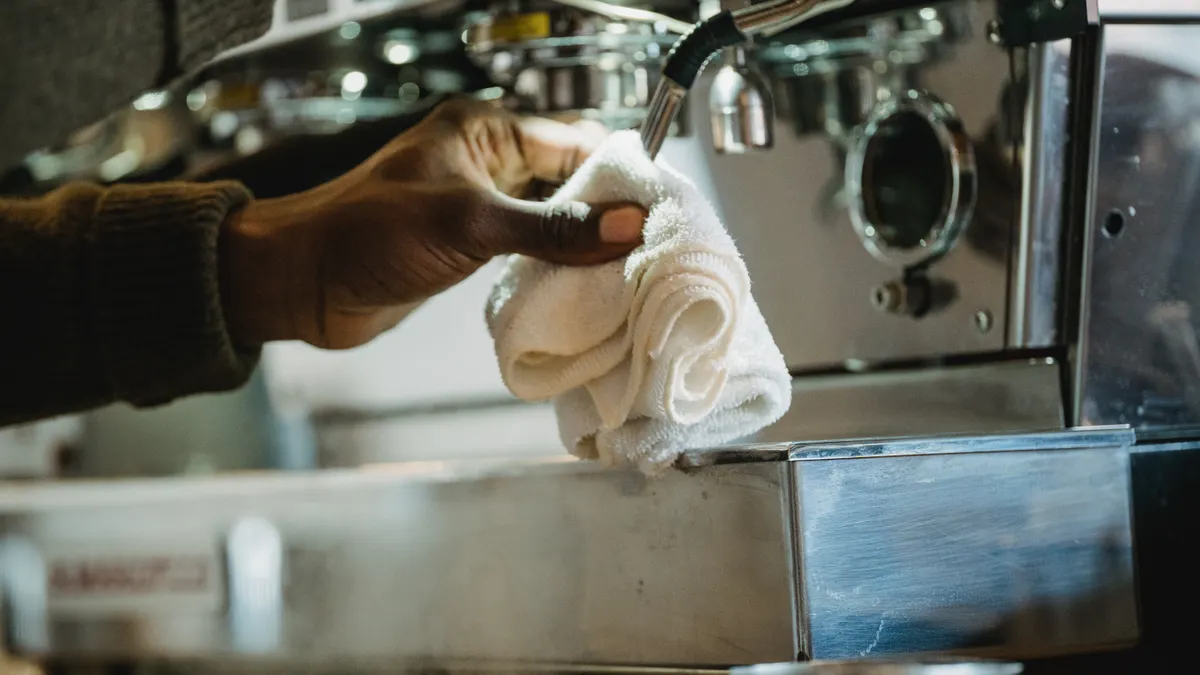
Backflushing works only on a machine with a three-way solenoid valve. That valve opens a path from the group to the drip tray discharge when brew pressure stops, which is why a blind filter disk can push cleaner through the group and out the exhaust port.
A machine with a mechanical spring valve is a different case. That setup does not have the same exhaust path, so the detergent cycle does not clear the right passage and can cause trouble instead of cleaning. If the manual says “backflush,” “backflush with detergent,” or mentions a three-way valve, that is the sign to proceed. If it does not, stop there and consult the manufacturer or a qualified technician before using detergent. For background on equipment-cleaning and food-contact sanitation, see the NSF food equipment standard and the Specialty Coffee Association’s resources.
A quick model clue helps. Many home machines with an E61-style group or a known three-way solenoid design can be backflushed, but the group style alone is not enough. The manual is the final check, and it should be treated as the main check when the label is vague, especially if the machine documentation is incomplete.
For a longer maintenance plan, this topic sits under the site’s home espresso machine maintenance schedule, which covers when cleaning fits into the bigger routine.
What do I need before I start?
Therefore, you need a blind filter disk, espresso detergent made for backflushing, and a cloth for the drip tray area. The blind filter disk is the key tool; without it, pressure cannot build the way the cleaning cycle needs.
The other useful piece is the machine manual. It usually names the correct detergent dose or tells you whether the group is safe for chemical backflushing. If the manual gives a brand-specific instruction, use that over any general advice.
Set up the work area before you start. Empty the drip tray, clear the portafilter basket, and make sure the water tank is full enough for several rinse cycles. The cleaning step pushes residue into the drip tray discharge, so a full tray wastes time and can splash dirty water back around the base.
Two reference pages are worth keeping in mind while you work: the Specialty Coffee Association’s equipment-care guidance and the NSF/ANSI 18 standard for food-service equipment. Those are not a substitute for your manual, but they are the kind of documents that explain why clean water rinse cycles matter after any detergent use.
Also, if you already use a broader maintenance routine, keep this step aligned with the espresso machine cleaning schedule and the how to clean an espresso machine guide.
How to backflush an espresso machine with chemical detergent?
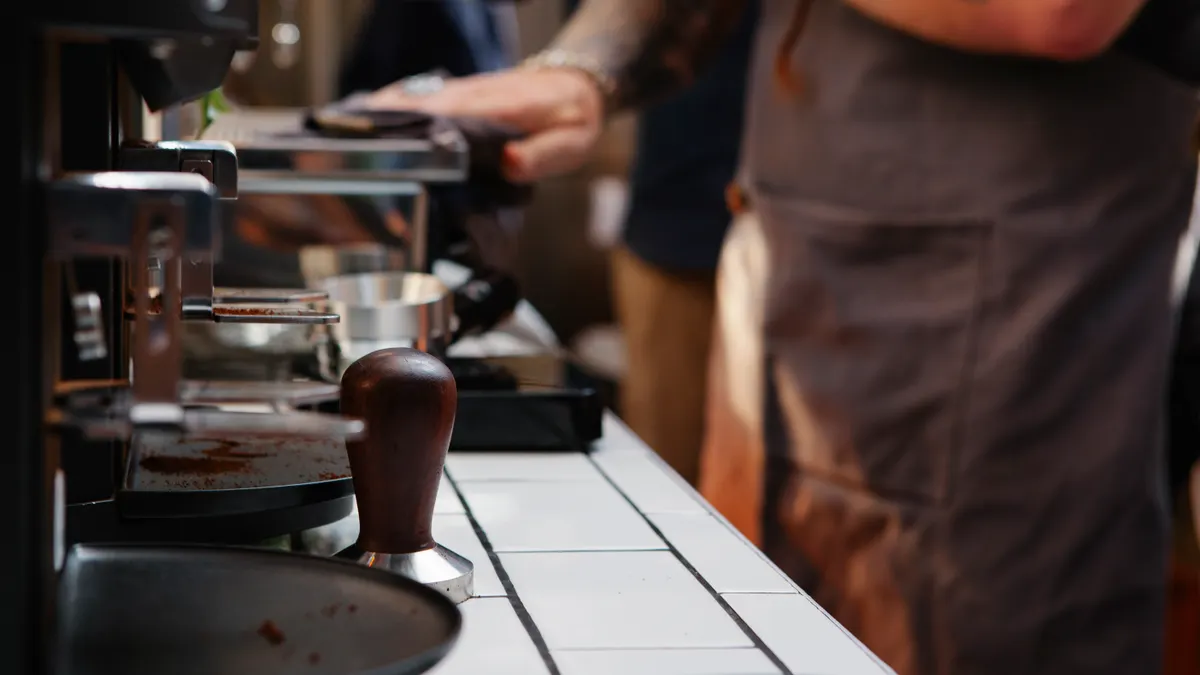
Backflush an espresso machine with chemical detergent by loading the blind filter disk, running short brew cycles with detergent, then repeating clean water cycles until the water runs clear and no cleaner smell remains. The whole job is simple, but the order matters.
- Insert the blind filter disk into the portafilter and lock it in. This seals the basket so pressure builds in the group instead of flowing through coffee grounds.
- Add detergent to the blind disk in the amount named by the manual or detergent label. The cleaner should sit where water can mix with coffee oil residue inside the group.
- Start the brew cycle for a short burst. Pressure forces detergent toward the three-way exhaust port and into the drip tray discharge.
- Stop the cycle and wait for the hiss or release that tells you pressure is bleeding off through the valve. That release is the sign the three-way solenoid is doing its job.
- Repeat the detergent cycle a few times, using short bursts rather than a long pull. Dark runoff in the tray means oily residue is moving out of the line.
- Rinse with clean water after the detergent cycles. Run the blind disk with plain water several times so no chemical film stays in the group head.
- Flush with a regular basket and water if your manual calls for it. This final pass clears the last trace of cleaner from the shower screen and basket path.
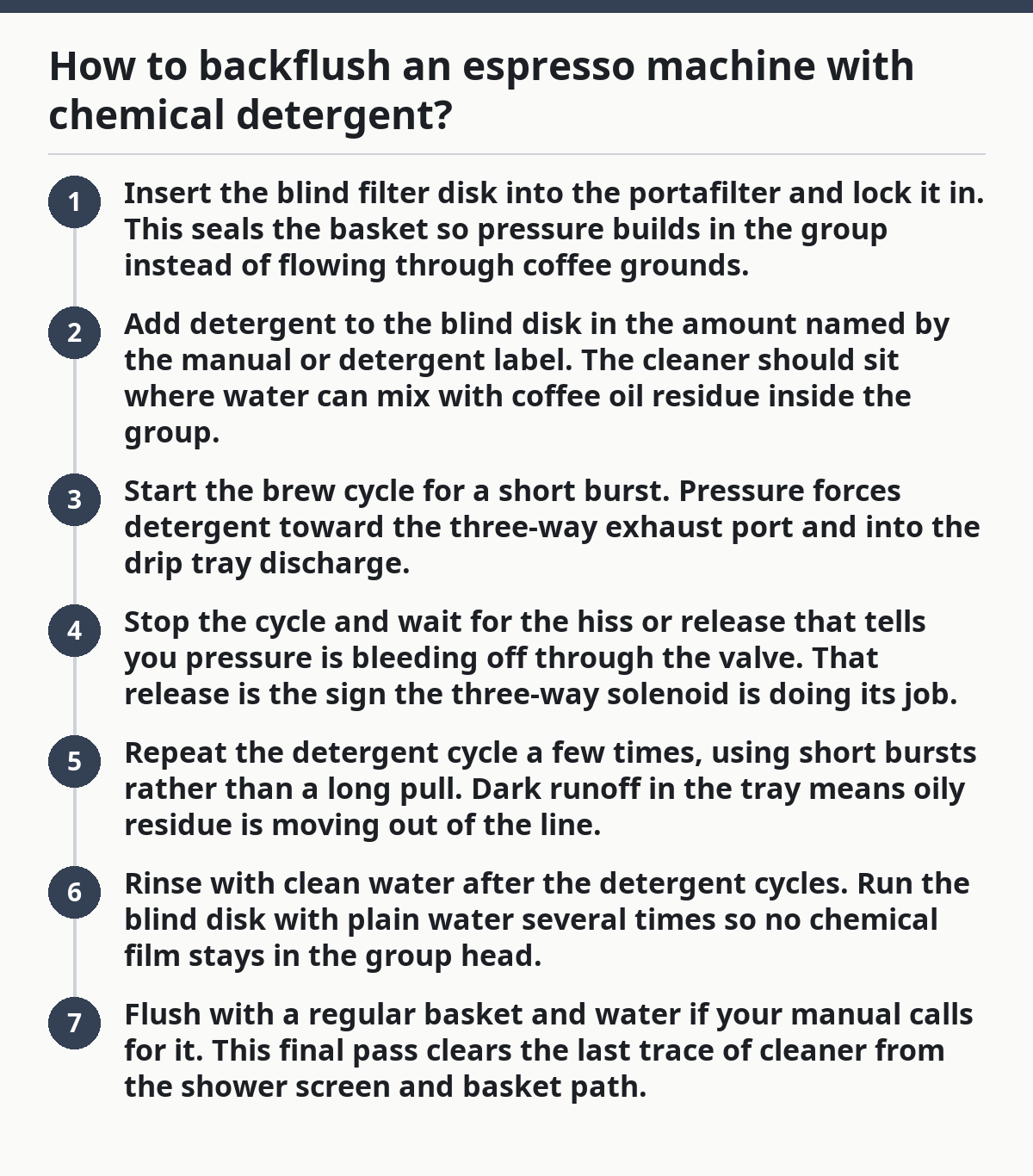
The goal is not to soak the group forever. It is to move detergent through the right passage, then clear it out before the next shot. If the water coming from the exhaust port still looks foamy or smells like cleaner, keep rinsing.
How much detergent should I use?
Use only the detergent dose listed by the cleaner label or the machine manual. The right amount is usually small, and more cleaner is not better. Too much can leave a bitter film on the group parts and make the rinse take longer.
The safest rule is to start with the manufacturer’s dose when one is given, rather than guessing. The blind filter disk does the mechanical work; the detergent only needs enough strength to loosen coffee oil residue. That residue is sticky and brown because espresso oils bake onto metal surfaces with heat and pressure, much like food browning on a hot pan.
If the manual does not give a dose, do not improvise with a larger scoop. A strong mix can linger in the group head and end up in the next cup. That is the main trade-off with chemical cleaning: it removes buildup well, but it also demands a careful rinse.
What should I watch for during the cycle?
Watch the runoff in the drip tray and the sound of the valve. The drip tray discharge should carry cloudy, dark liquid at first if the group has visible coffee oil residue.
The hiss after each stop is part of the process. That sound means pressure is venting through the three-way exhaust port instead of staying trapped in the group. If you do not hear that release, stop and check compatibility before you keep going. A spring-valve setup will not behave the same way.
A clean cycle usually changes in three ways: the runoff gets lighter, the smell gets less sharp, and the cycle sounds more ordinary by the end. If the water still comes out visibly dirty after several rinse cycles, the group may need more than routine backflushing. At that point, the problem may be beyond simple detergent cleaning.
What mistakes make backflushing worse?
The biggest mistake is backflushing a group that is not designed for it. That can leave cleaner where it should not be and does nothing useful for a non-solenoid path. The cost is wasted detergent and a dirty group that still tastes stale.
The second mistake is stopping after the detergent cycle. The cleaner works only if it is followed by clean water rinse cycles. Skip the rinse, and the next espresso can taste bitter or soapy.
A third mistake is using the wrong tool. A normal basket will not seal the group the way a blind filter disk does. Without the blind disk, pressure does not build, and the cleaner cannot move through the exhaust path with enough force.
A fourth mistake is treating every machine the same. A three-way solenoid valve and a mechanical spring valve are not cosmetic differences. They change the cleaning method itself, which is why the manual matters more than the shape of the handle or the brand name on the front. If the machine is unfamiliar, consult the manufacturer or a qualified service technician and use the espresso machine maintenance hub before you proceed.
When should I stop and check the manual?
Stop and check the manual when the group style is unclear, the machine lacks a clear backflush note, or the exhaust path does not sound like a three-way valve. This is the line where guesswork turns into damage.
A manual check also matters if the machine uses a spring valve, a custom group, or a design that does not send spent water to the drip tray discharge. Backflushing is a specific cleaning method for a specific valve layout. If that layout is missing, use the cleaning method the manufacturer gives instead.
The same caution applies if the detergent label gives a different procedure from the machine book. The book for the machine wins for compatibility, and the cleaner label wins for dose. If the two conflict, do not force a middle ground; check the manual again and, if needed, ask a technician.
Can you backflush any espresso machine?
No, not every espresso machine can be backflushed. The method depends on a three-way solenoid valve and a path that sends spent water to the drip tray discharge.
A machine with a mechanical spring valve is the main example of one that should not be treated the same way. It does not use the same exhaust path, so the blind filter disk and detergent cycle do not do the same job. If the manual does not mention backflushing, assume the answer is no until you confirm otherwise.
What happens if you don’t backflush an espresso machine?
Because coffee oils build up in the group, that residue can sit in the three-way path and around the exhaust port. The first signs are usually stale smell, darker runoff, and shots that taste tired before the coffee itself has gone bad.
Left alone, that buildup can make the brew path harder to keep clean between uses. The machine may still pull espresso, but the taste and the rinse water often tell the story first. Backflushing is not cosmetic; it removes residue that normal rinsing does not reach.
Is detergent backflushing enough on its own?
No, detergent backflushing is only one part of cleaning. It removes oil residue from the internal path, but it does not replace emptying the drip tray, wiping the group area, or using clean water rinse cycles.
Think of it like cleaning a pan after searing: detergent loosens what heat has stuck on, but water clears the chemical film afterward. The detergent step does the heavy lift, and the rinse step makes the group ready for espresso again.
Drafted with AI; not yet reviewed by a person.