Last updated: November 15, 2026
Quick answer: if you want the cleanest temperature control, a dual boiler is usually the most precise choice; if you want the simplest setup, a single boiler is the most compact; and if you want one hot boiler for steam with a separate brew path, a heat exchanger sits in the middle. This guide to Espresso Machine Boiler Types Explained: Single, Dual, and Heat Exchanger Systems sorts out the trade-offs so the right boiler type is easier to spot.
Key Takeaways
- Single-boiler systems are the simplest path, but they force one boiler to do two jobs at different temperatures.
- Dual-boiler systems give brewing and steaming their own water path, so temperature control is easier to manage.
- Heat exchanger systems use one heated boiler for steam and a separate route for brew water, often with a siphon tube inside the boiler.
- A PID controller helps tighten temperature control, which matters most when you want repeatable extractions.
- Boiler material, capacity, heating power, pressure control, spare parts, and service support are the buying questions that keep showing up in real ownership.
Single boiler: the simplest body with the biggest compromise
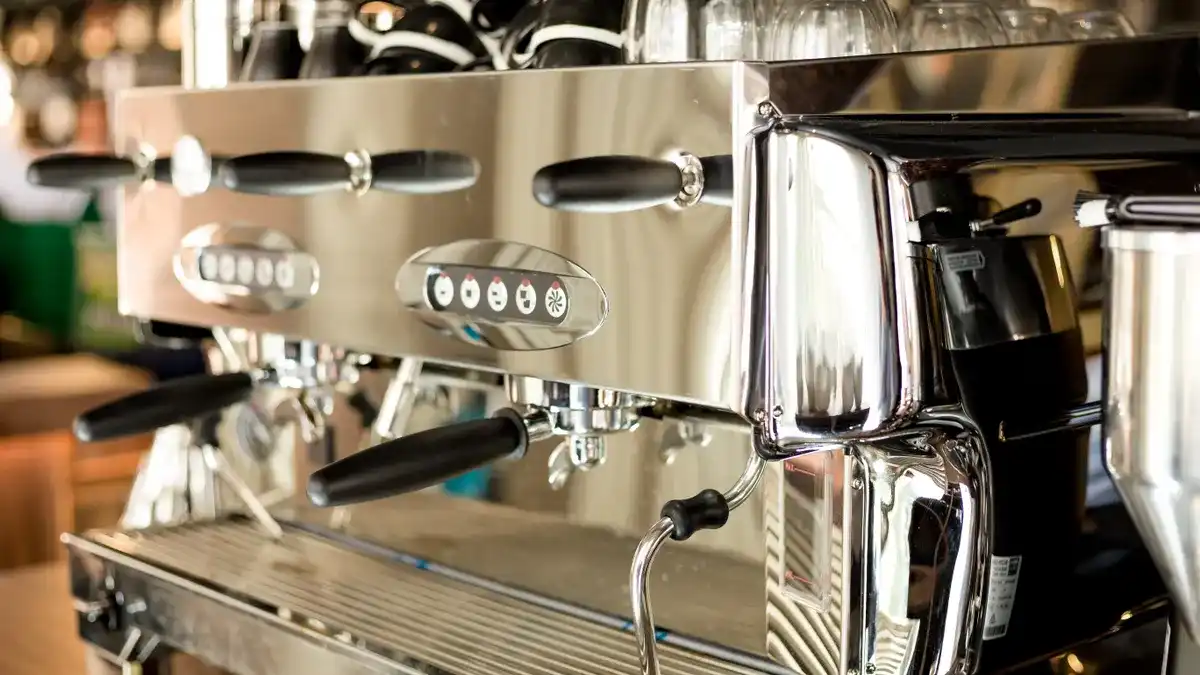
A single boiler is the basic answer when space, cost, and simplicity matter more than speed. It heats one chamber for both brewing and steaming, so the same water path has to switch between espresso temperature and milk-steam temperature.
That switch is the whole story. It means you wait for the boiler to move from brew-ready heat to steam-ready heat, then back again if you want another shot. A single boiler can be a smart fit for one or two drinks, but it becomes less convenient when you want a milk drink after every espresso.
The hidden cost is workflow, not just hardware. If the boiler has to sit at one temperature for brewing, steaming power drops; if it sits hotter for steaming, brew temperature has to be managed by cooling or flushing. That is why single-boiler owners often care more about rhythm than raw output.
A copper boiler tends to be associated with fast heat transfer, while a stainless steel boiler is often chosen for durability and corrosion resistance. Material is not the same as performance by itself, though. Boiler shape, capacity, and heating power still decide how much that shell can actually do.
What this type does well
- Keeps the design compact.
- Reduces the number of major heating parts.
- Fits a user who pulls shots in a calm, one-drink-at-a-time pattern.
What it does poorly
- Makes back-to-back espresso and milk drinks slower.
- Demands temperature switching between brew and steam.
- Gives you less room to recover from poor workflow.
What does a dual boiler do differently?
A dual boiler gives brew water and steam water their own separate boilers, so each side can stay at its own setpoint. That is the clearest answer for anyone who wants espresso and milk drinks with less waiting between steps.
For example, you can pull a shot, steam milk, then go straight into the next shot without fighting the heat curve every time. The point is not luxury for its own sake. It is stable brew temperature and stronger steam availability at the same time.
Dual boiler temperature control is where this design earns its keep. A PID controller helps keep the brew boiler close to target by trimming temperature swings instead of letting the system wander; for a technical overview of PID control, see Omega Engineering’s PID guide, and for coffee-machine examples, see manufacturer documentation such as Baratza’s support materials. That matters because espresso extraction responds fast to heat changes, especially when you are pulling several drinks in a row.
The trade-off is that more hardware means more complexity. A dual-boiler setup has more parts to heat, more things to maintain, and usually a larger footprint than a single-boiler unit. If a buyer wants a machine that disappears into the routine, this is not the leanest choice.
The buying questions that matter most are practical ones: boiler material, boiler capacity, heating power, pressure control, spare parts, and service support. Those questions matter even more on a dual-boiler setup because there are simply more systems that can drift out of spec.
Best fit for
- A home barista who wants repeatable brewing.
- A household that makes multiple milk drinks in one session.
- Anyone who cares about temperature stability more than warm-up simplicity.
Not the best fit for
- A casual drinker who makes one espresso and then leaves.
- A small counter that cannot handle a larger body.
How does a heat exchanger espresso boiler work?
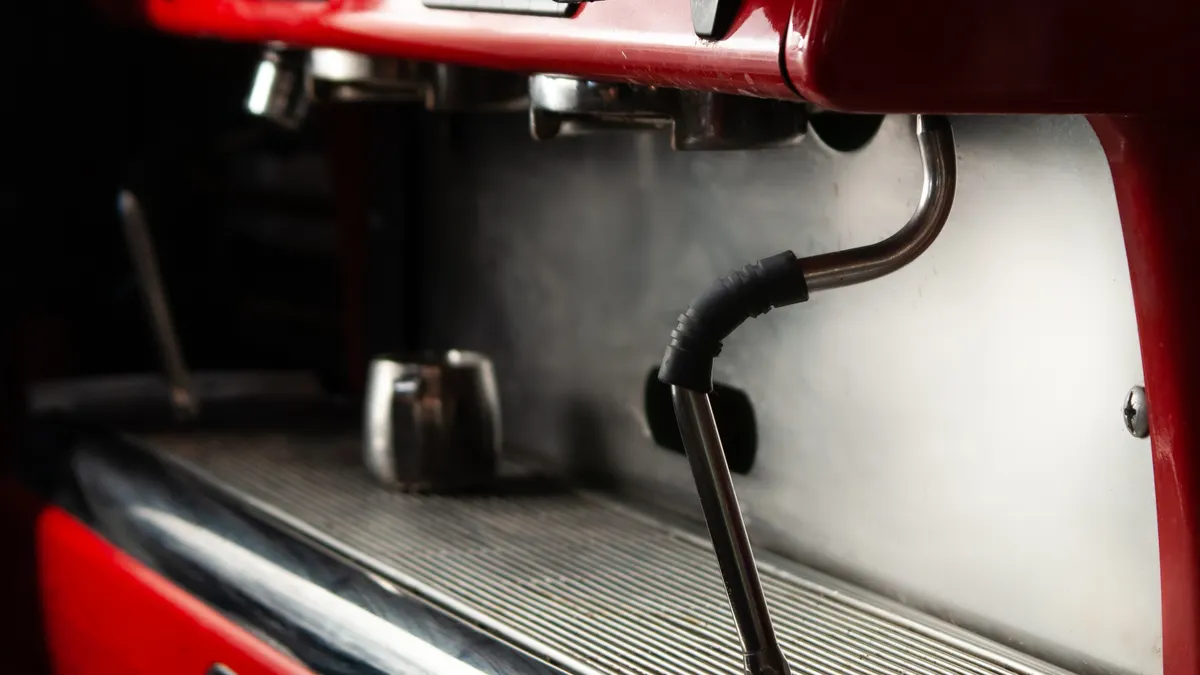
A heat exchanger boiler keeps one boiler hot for steam while brew water travels through a separate path that picks up heat on the way to the group head. That lets the user brew and steam from the same hot system without needing two separate boilers.
The key part is the siphon tube inside the boiler path. It helps move water through the heated zone so the brew water can reach a useful temperature while the boiler stays ready for steam. That design is why heat exchanger systems sit between the simplicity of a single boiler and the control of a dual boiler.
This is the type that often confuses new buyers, because it sounds like a compromise and often is one. It can be quick and capable, but it also asks for more care around temperature management than many people expect. A heat exchanger can be a strong fit for milk drinks, yet its brew water can be less straightforward to dial in than a separate brew boiler with a PID.
Here’s the catch: the same hot environment that helps steam also makes brew temperature control less direct. That does not make the design bad. It means the user has to care more about machine behavior and less about set-and-forget convenience.
The line to remember is simple: if a single boiler is about switching, and a dual boiler is about separation, a heat exchanger is about sharing heat without fully sharing the boiler. That distinction is what explains the workflow.
Where it fits
- Home use with regular milk drinks.
- Users who want stronger steam than a basic single boiler.
- Buyers who can live with a more technique-sensitive brew path.
Where it falls short
- It is harder to explain to a beginner.
- Brew temperature is less direct than on a dual boiler.
- The system rewards attention to process.
Which boiler type handles back-to-back milk drinks best?
A dual boiler handles back-to-back milk drinks best because brew and steam stay ready at the same time. That is the main reason it wins when the real test is not one cappuccino, but a run of drinks.
For example, you pull one espresso, steam milk, pour, then do it again without waiting for the boiler to recover its mood. That is the situation where thermal recovery rate matters most, even if the term sounds technical. The machine that recovers cleanly keeps the line moving.
A 5,700 mL dispensing test is less useful here than the broader point: stable heat matters because the brew path and steam path stay at target when the workload rises. That is the sort of steadiness buyers are chasing when they ask about recovery, because stable heat is what keeps a second and third drink from tasting like a different recipe.
On the flip side, a single boiler can still work for milk drinks if the pace is slow and the user does not mind waiting. A heat exchanger sits in the middle: often faster than a single boiler, less direct than a dual boiler.
A buyer should also think about what happens when the boiler pressure goes wrong. According to huazell.com, low water, a scaled autofill probe, a failed pressure stat, heating-element scale, or trapped air can make boiler pressure stick, and if pressure rises above 2 bar, the pressure control system needs inspection. That is not a reason to panic. It is a reason to care about serviceability before purchase.
For repeated milk drinks
- Choose dual boiler first.
- Choose heat exchanger if you want speed with fewer boilers.
- Choose single boiler only if the pace is slow.
What should you check before buying a boiler type?
You should check boiler material, boiler capacity, heating power, pressure control, spare parts, and service support before you pick a boiler type. Those six questions tell you more than a glossy spec sheet, because they show how the machine will behave after the novelty wears off.
For example, you are comparing two machines that look similar from across a kitchen counter. One may still be the better buy because its parts are easier to service, its heating system is better matched to the boiler size, or its control setup is easier to live with over years.
A pressure gauge can go up to 3 bars, according to Wikipedia’s Espresso page. That number is not a target for daily brewing; it is a reminder that pressure is part of the system’s behavior, not just a single magic setting. The Faema E61 used an electric pump to pressurize water to 9 bars (900 kPa), also according to Wikipedia’s Espresso page, which shows how much pressure control matters once brewing begins.
That is why buyers should not stop at boiler type alone. A boiler with the wrong control system can feel worse than a less glamorous one with better pressure management. A PID controller can help, but it is not a cure-all if the rest of the build is weak; if you are unsure about installation, maintenance, or pressure behavior, consult a qualified technician or the manufacturer’s service guidance.
The best questions are practical:
- How large is the boiler?
- What material is it made from?
- How fast does it recover?
- How does it control pressure?
- Can replacement parts actually be found?
- Is service support available when scale or pressure problems show up?
The Verdict: which boiler type fits which reader?
The right boiler type depends on how often you switch between espresso and milk, and how much control you want over heat. A single boiler suits the patient user, a heat exchanger suits the user who wants speed with one hot boiler, and a dual boiler suits the person who wants the cleanest temperature control.
For instance, you may already know your drink pattern, but you are trying to avoid buying the wrong heating system for the next five years. That is the real decision. Not brand hype. Not case finish. Just workflow, recovery, and how much patience you have for temperature shifts.
If you want the shortest path to a dependable setup, start by matching the boiler type to the number of drinks you make in a row. Then check boiler material, boiler capacity, heating power, pressure control, spare parts, and service support. Those details tell you whether the machine will be easy to live with after the first week.
The blunt version is this: dual boiler for control, heat exchanger for speed, single boiler for simplicity. That is the map most home buyers actually need.
What is the difference between single and dual boiler espresso machines?
A single boiler uses one heated chamber for both brewing and steaming, so it has to change temperature between tasks. A dual boiler keeps brew and steam separate, which makes temperature control easier and lets both functions stay ready at once. That separation is the main reason dual boilers handle repeated milk drinks better.
How does a heat exchanger espresso boiler work?
A heat exchanger uses one hot boiler for steam while brew water passes through a separate route that picks up heat on the way to the group head. A siphon tube helps move water through that path. The design gives you speed and steam power, but it asks for more attention to brew temperature than a dual boiler.
Sources
- en.wikipedia.org, Espresso – Wikipedia (checked 15 Nov 2026)
- huazell.com, Why Is Your Espresso Machine Boiler Pressure Stuck? (checked 15 Nov 2026)
Drafted with AI; not yet reviewed by a person.

One thought on “Espresso Machine Boiler Types Explained”