Last updated: November 16, 2026
Quick answer: 3 features matter most for cup quality in a prosumer espresso machine — temperature stability, pressure control, and extraction control. The Prosumer Espresso Machine Features: Which Upgrades Actually Affect In-Cup Quality question is really about whether the machine helps the puck see consistent heat and flow. A prosumer espresso machine earns its premium when it supports that consistency, not when it adds chrome. If you are deciding where the money goes, separate the parts that shape extraction from the parts that only make the barista’s day easier.
Key takeaways
- Heat control matters more than cosmetic extras when the goal is a cleaner, more repeatable shot.
- A PID controller, a solenoid group head, and useful pressure or flow control can change the cup; a shot light usually does not.
- Plumb-in capability can help workflow and temperature consistency, but it does not fix bad grind or puck prep. Check kitchen layout with a qualified installer.
- A commercial portafilter and a stainless steel chassis support durability and thermal mass, yet they are not taste upgrades by themselves.
- Some features are worth skipping if the budget is tight, especially the ones that change convenience more than extraction.
What counts as a prosumer espresso machine?
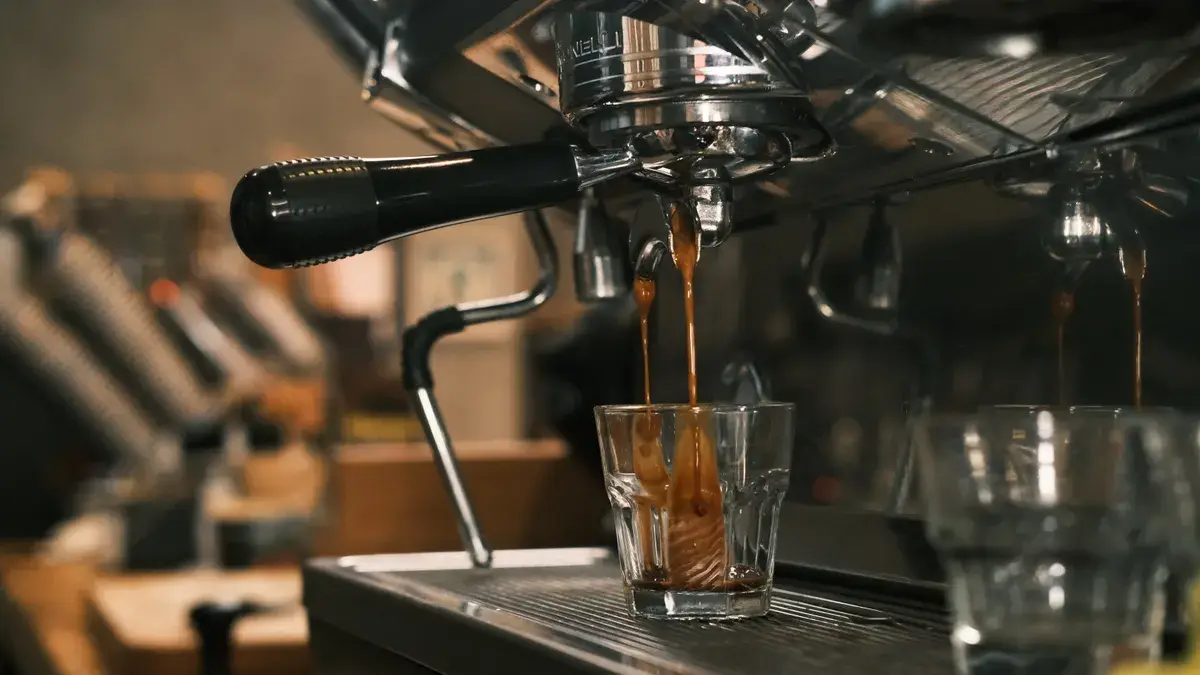
A prosumer espresso machine is a home espresso setup built with commercial-style parts and controls, but sized for a kitchen instead of a café. It usually includes a commercial portafilter, a heavier chassis, and features like PID temperature control or plumb-in capability that sit above entry-level home gear.
That label matters because the feature list gets crowded fast. A shot timer, joystick steam valves, a stainless steel chassis, and a flow control needle valve can all sound premium, but they do different jobs. One may help consistency in the cup; another may only make the workflow nicer.
For a reader comparing options, the useful question is not “Which model has the most extras?” It is “Which upgrades change water temperature, pressure, or flow enough to change extraction?” That is the line that separates drink quality from showroom trim. For a broader buying framework, the hub on how to choose a home espresso machine belongs upstream of this page, not inside it.
Which upgrades change the shot?
The upgrades that change the shot are the ones that control heat, pressure, and water path. In practice, that means PID temperature control, stable group-head design, and any flow control needle valve or pressure-management feature that changes how water meets the puck.
A PID controller, short for proportional-integral-derivative controller, keeps boiler temperature closer to a target than simple thermostat cycling usually does. That matters because espresso extraction is sensitive to heat swings, especially when pulling back-to-back shots. A machine without that control can still make good espresso, but it gives less repeatability.
A solenoid group head also matters. A solenoid is an electrically controlled valve that can release pressure quickly after the shot. That often leaves the puck drier and the portafilter easier to knock out, but the real quality gain is steadier pressure behavior during and after extraction. A solenoid does not make coffee better by itself; it makes the system easier to manage well.
Flow control needle valve features can shift the pace of preinfusion and the rise of pressure during the shot. That can help with light roasts or finicky baskets, but it also adds another variable to learn. A commercial portafilter helps thermal stability and durability, yet its biggest cup-quality role is indirect: it supports even extraction by fitting the basket and group properly. For grind and puck prep, the espresso grind size guide is the better next stop.
What should you skip first?
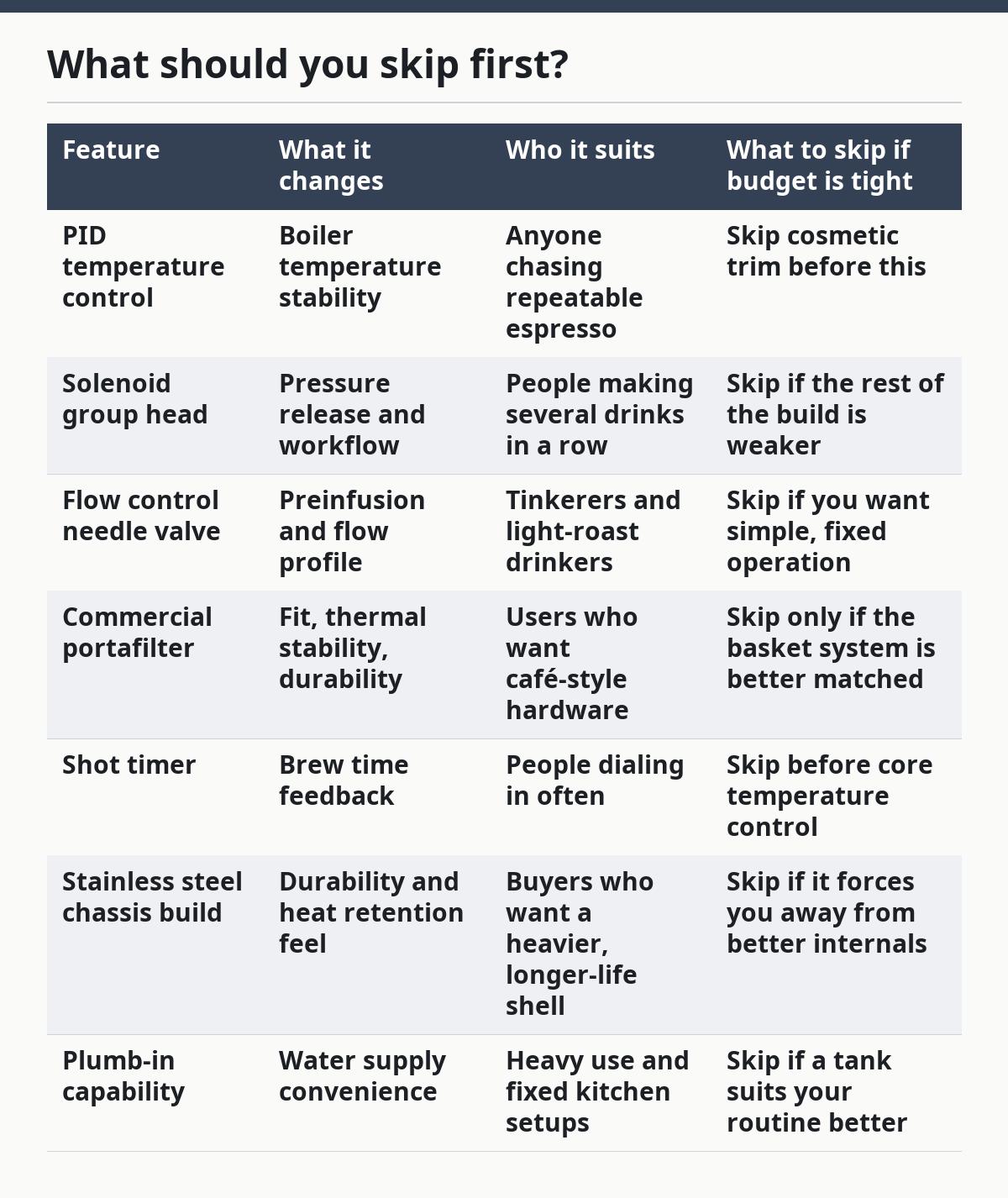
The first things to skip are the upgrades that help the operator more than the cup. A shot timer, shot light, joystick steam valves, and a stainless steel chassis all have value, but none of them automatically improve extraction.
A shot timer helps repeatability because it gives a quick read on brew length. That is useful, but it is still a measuring tool, not a taste engine. If the grinder and puck prep are poor, a timer only helps you repeat a bad shot more accurately. A shot light does even less for flavor; it mainly improves visibility at the cup.
Joysticks on steam valves change how the machine feels to use. They can be faster than a traditional knob, but milk texture depends more on steam power, wand design, and technique than on the handle style itself. A stainless steel chassis improves durability and can support thermal mass, yet the metal alone does not guarantee better extraction. It is a build-quality signal, not a flavor feature.
The same goes for plumb-in capability when it is treated as a trophy feature. Direct water connection can improve convenience and keep a reservoir from running dry, but it does not rescue inconsistent grind size or poor dosing. If the budget is limited, skip the convenience items before you skip the features that shape heat and flow. For water setup choices, see espresso machine water and filtration.
| Feature | What it changes | Who it suits | What to skip if budget is tight |
|---|---|---|---|
| PID temperature control | Boiler temperature stability | Anyone chasing repeatable espresso | Skip cosmetic trim before this |
| Solenoid group head | Pressure release and workflow | People making several drinks in a row | Skip if the rest of the build is weaker |
| Flow control needle valve | Preinfusion and flow profile | Tinkerers and light-roast drinkers | Skip if you want simple, fixed operation |
| Commercial portafilter | Fit, thermal stability, durability | Users who want café-style hardware | Skip only if the basket system is better matched |
| Shot timer | Brew time feedback | People dialing in often | Skip before core temperature control |
| Stainless steel chassis build | Durability and heat retention feel | Buyers who want a heavier, longer-life shell | Skip if it forces you away from better internals |
| Plumb-in capability | Water supply convenience | Heavy use and fixed kitchen setups | Skip if a tank suits your routine better |
How do the main features compare?
The main features compare by whether they affect extraction directly, indirectly, or not much at all. Direct changes are the ones that alter water temperature, brew pressure, or flow. Indirect changes make those things easier to repeat. Cosmetic or comfort changes mainly affect workflow.
Here is the practical split:
- Direct cup-quality drivers: PID temperature control, flow control needle valve, stable group-head design, solenoid group head behavior.
- Indirect quality drivers: shot timer, commercial portafilter fit, plumb-in capability, chassis mass and stiffness.
- Mostly convenience features: shot light, joystick steam valves, exterior finish.
That does not mean the indirect features are useless. A plumb-in setup can support steadier routine because the machine is always ready, and a commercial portafilter can improve fit and heat handling. But if two machines cost about the same and one spends its complexity on lights and levers while the other spends it on temperature control, the second is usually the better bet for taste. For a broader comparison, the espresso machine buying checklist can help narrow the field.
The hardest part is that many brands bundle all of these into one glossy package. A buyer can mistake “more features” for “better espresso.” They are not the same. The better machine is the one that reduces extraction drift, especially across multiple shots and a range of beans.
When does plumb-in capability matter?
Plumb-in capability matters when the machine will sit in one place and make multiple drinks often, because it removes the need to refill a reservoir. It also helps if the buyer values routine consistency more than portability.
That said, plumb-in is a workflow feature first and a cup-quality feature second. A stable water supply can help prevent interruptions, and some plumbed setups may support steadier usage patterns, but the shot will still live or die on temperature, grind, dose, and puck prep. If a kitchen layout makes plumbing awkward, a reservoir can be the smarter setup. A qualified technician should check water pressure and filtration before any install.
This is also where maintenance matters. A plumbed setup shifts the responsibility to the water supply and filtration choice. If the water is not suitable, the convenience of direct connection can turn into a scale problem or a taste problem. That trade-off is real, and it is one reason this feature is wrong for someone who wants a simple countertop routine.
For a reader trying to decide, the question is not “Is plumb-in premium?” The question is “Does fixed placement and higher-volume use justify the plumbing complexity?” If the answer is no, the money can usually do more work elsewhere.
When should you stop caring about features?
You should stop treating features as the main answer when the machine already has the basics covered and the remaining choices only change comfort. At that point, the grinder, water, and puck prep matter more than another switch or valve.
If the machine already has a stable brew temperature and a solid group head: the next upgrade may give only small gains — put attention on workflow and consistency instead of chasing another control.
If the feature only changes how the machine feels to use: the cup may not change much — treat it as a convenience choice, not a flavor upgrade, and check with a qualified technician if you are unsure.
If the machine lacks temperature control entirely: fancy extras will not fix that — the cup will usually be more limited by heat swings than by any premium trim.
If plumbing the unit would complicate the kitchen: the convenience gain may not justify the setup — a reservoir-based model can be the better fit.
If the design invites tinkering but you want simple repeatability: flow control and multiple adjustments can add confusion — choose fewer variables, not more.
These are not moral rules; they are fit rules. A prosumer espresso machine is worth paying for when the added hardware supports the brewing variables that matter. It is not worth paying for when the extra parts mainly create a more impressive spec sheet.
What mistakes do buyers make?
The first mistake is paying for visible extras before paying for extraction control. The consequence is a nicer-looking kitchen tool that does not make a better cup. The better alternative is to prioritize PID temperature control and stable brew hardware before shot lights or decorative finishes.
The second mistake is treating a shot timer as a taste feature. The consequence is false confidence, because timing alone does not tell you whether the shot is under-extracted or over-extracted. The better alternative is to use time as a check, not as the goal, and to confirm results against flavor.
The third mistake is assuming plumb-in capability automatically improves quality. The consequence is disappointment when the drink tastes the same but the setup is more complex. The better alternative is to treat plumb-in as a workflow decision tied to kitchen layout and use pattern, with advice from a qualified installer.
The fourth mistake is ignoring the portafilter and group interface. The consequence is poor heat stability or awkward basket fit, which can hurt extraction repeatability. The better alternative is to look for a commercial portafilter with a matched basket system and a solid group design.
The fifth mistake is buying for tinkering when the goal is plain espresso. The consequence is a machine with a flow control needle valve and multiple knobs that never get used well. The better alternative is to keep the system simpler if the drinker wants consistency more than experiments. For dialing in, the espresso dose and yield guide is often more useful than another feature.
Which features are worth the premium?
The features worth the premium are the ones that shrink variation shot to shot. In a prosumer espresso machine, that usually means PID temperature control, a dependable solenoid group head, and a flow system that gives useful control without turning every shot into a science project.
The features that are usually less worth the premium are the ones that improve the owner experience but barely touch extraction. A shot light, joystick steam valves, and a polished stainless steel chassis can be pleasant, even attractive, but they are secondary to temperature stability and water delivery.
That is the cleanest way to think about the purchase: buy the features that make good espresso easier to repeat. Skip the ones that only make the machine feel fancier. If the reader keeps that split in mind, the model list gets much shorter, and the right machine becomes easier to spot.
For deeper standards on espresso brewing and equipment vocabulary, the Specialty Coffee Association and the International Organization for Standardization are useful reference points, especially for terms around espresso preparation and equipment design. Because rates, standards, and product details change across markets, this article is information rather than financial advice; a qualified adviser should be consulted for any buyer’s own situation.
Drafted with AI; not yet reviewed by a person.