Last updated: November 19, 2026
Quick Answer: the Home Espresso Machine Maintenance Schedule has 3 routine blocks — daily wipe-downs, a weekly chemical clean, and monthly checks on water and wear parts. Keep coffee oils out of hot water paths, keep milk residue off the steam system, and use a water hardness test strip as a practical first check before scale turns into a bigger problem.
Key takeaways
- Clean coffee-contact parts every day so oils do not bake onto metal and plastic.
- Use a weekly chemical cycle for parts that touch espresso, not just hot water.
- Check water hardness and softener settings monthly; water is the main driver of scale.
- A blind basket, Cafiza powder, and a steam wand purge cloth belong in the routine.
- Skip aggressive cleaning if you do not know your machine’s materials or if the maker forbids a step.
What belongs in daily care?
Daily care means removing coffee oils and milk film before they harden. That is the part that keeps flavor steady and stops yesterday’s residue from becoming today’s bitter cup.
The daily routine should focus on the parts that see coffee after the shot and steam after frothing. That usually means the portafilter, basket, drip tray, steam wand, group head screen area, and any cup-warming tray that catches splatter. A 30-second wipe after each use is easier than scrubbing a crusted surface later.
Use this simple order after the last drink of the day:
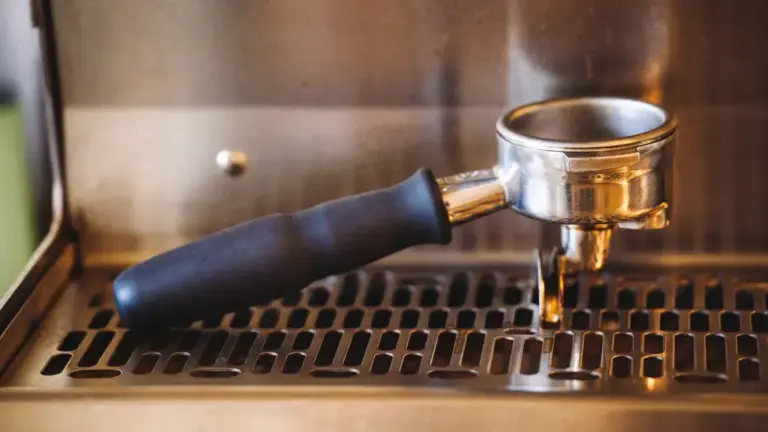
- Knock out the spent puck and rinse the portafilter and basket with hot water. The goal is to remove wet grounds before they dry into the metal.
- Run a short purge through the group head with no portafilter attached. This clears loose grounds and fresh espresso residue from the screen area.
- Wipe the shower screen rim and gasket face with a damp cloth. A clean rim helps the portafilter seat evenly.
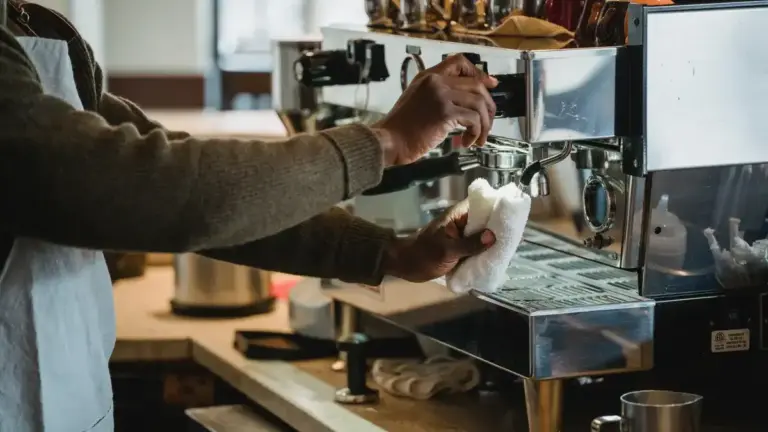
- Purge the steam wand right after frothing, then wipe it with a steam wand purge cloth. This keeps milk proteins from cooking onto the tip.
- Empty and rinse the drip tray. A full tray can splash old coffee back onto the front of the machine.
If your routine slips, the first thing that changes is taste. Old oil makes espresso taste flat or harsh, and old milk leaves a sour smell near the steam wand. A machine that looks clean from across the room can still have residue where coffee actually touches metal.
Home espresso machine maintenance schedule by frequency
This Home Espresso Machine Maintenance Schedule is the cleanest way to split the work: daily for coffee oils, weekly for chemical cleaning, and monthly for water and wear checks. That split matches what gets dirty fastest and what causes the most trouble if ignored.
| Frequency | What to do | Main tools | What it protects |
|---|---|---|---|
| Daily | Purge group head, rinse portafilter and basket, wipe steam wand, empty drip tray | Damp cloth, steam wand purge cloth | Flavor, milk hygiene, surface buildup |
| Weekly | Chemical clean coffee-contact parts with a blind basket and Cafiza powder, soak removable parts if the maker allows it | Blind basket, Cafiza powder | Espresso path, valve action, oil removal |
| Monthly | Check water hardness with a water hardness test strip, inspect seals and screens, confirm softener regeneration interval | Test strip, basic brush, maker’s manual | Scale control, gasket life, flow stability |
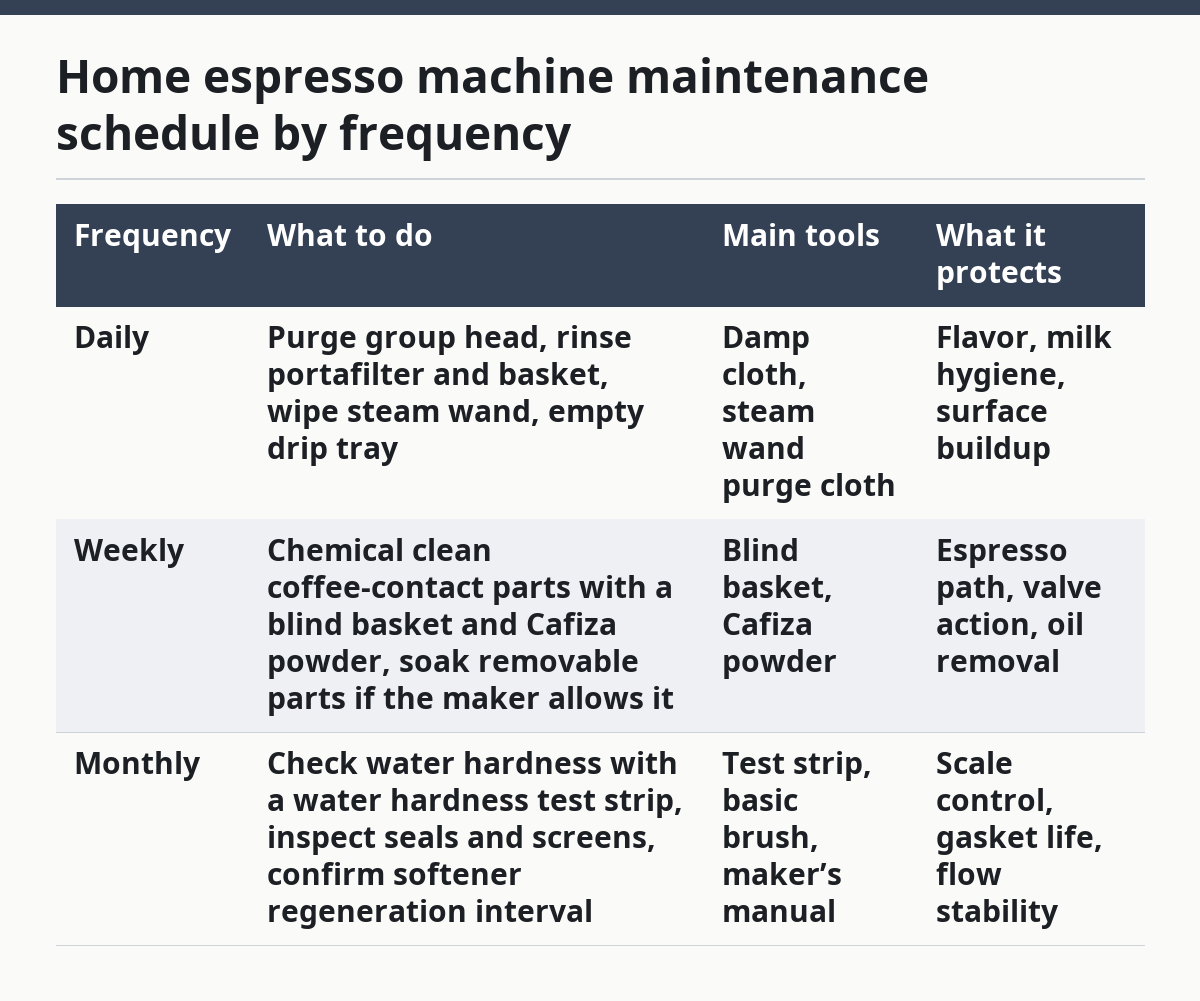
The most common mistake is treating all cleaning as one job. A daily wipe does not replace a weekly chemical cycle, and a weekly cycle does not fix hard water. Each layer handles a different kind of grime.
This is also where machine type matters. A manual machine with a simple steam wand is easier to keep clean than a heat-exchanger or dual-boiler setup with more parts in the path. The Home Espresso Machine Maintenance Schedule still works for both, but the monthly inspection matters more as the internal plumbing gets more complex.
How do I do the weekly chemical clean?
A weekly chemical clean removes coffee oils from the espresso path using a blind basket and Cafiza powder. It is the routine that keeps the group head and valve path from loading up with brown film.
Use the machine maker’s cleaning instructions first, because cycle length and detergent dose can vary by model. If the manufacturer names a different cleaner, follow that. For many home setups, Cafiza powder is the common choice for cleaning coffee oils, but it is for the espresso path, not for milk parts or the steam wand.
A basic weekly cycle looks like this:
- Place the blind basket in the portafilter.
- Add the cleaning powder according to the machine’s instructions.
- Lock the portafilter into the group head.
- Run the brew cycle in short bursts so the cleaner moves through the group and stops before it sits too long.
- Pause between bursts if the machine’s instructions call for it.
- Remove the portafilter, rinse it well, and flush the group head with clean water.
- Pull a discard shot of plain water so no cleaner stays in the path.
The result should be a cleaner smell from the group head and a smoother flow through the screen. If you see dark residue in the rinse water, the cycle is doing useful work. If the water still carries a sharp chemical smell after rinsing, the flush step was too light.
Do not use this cycle to clean the steam wand. Milk residue needs a separate wipe and purge routine, and chemical cleaner in the steam system is the wrong fix. This is also not the place to improvise with random detergents. The espresso path is small, and leftover soap is easy to taste.
What should I check each month?
Monthly care means checking water hardness, wear parts, and any softener regeneration interval before scale starts to win. This is the month-to-month layer that saves the machine from slow damage you cannot see from the outside.
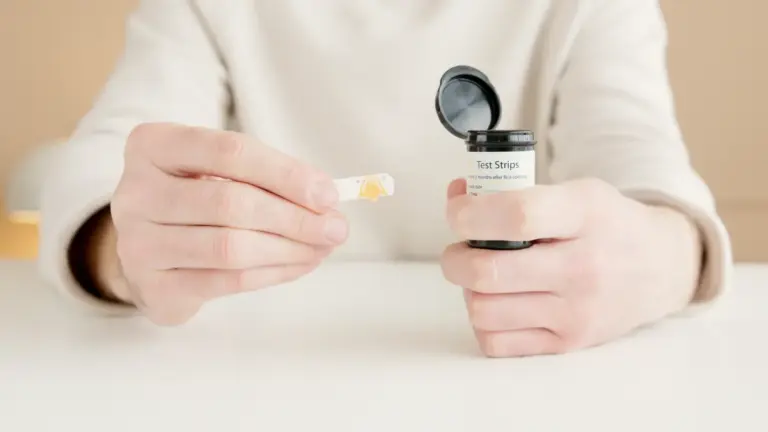
The water hardness test strip is a practical first check if the machine uses a tank. Dip the strip in the fill water the way the strip directions say, then compare the color to the chart that comes with it. If the water is hard, the machine may need more frequent filter changes or a water softener schedule, depending on the setup.
Month by month, look at these parts:
- Group gasket: check for cracks, flattening, or coffee seepage around the seal.
- Shower screen: look for buildup that does not rinse away with water.
- Steam wand tip: confirm the holes are clear.
- Drip tray and grate: clean hidden corners where residue sits.
- Water filter or softener: note the regeneration or replacement interval from the maker.
If the machine uses a water softener, regeneration interval matters as much as cleaning. A softener that is past its schedule can pass hard water straight into the boiler or thermoblock. That leads to scale, and scale narrows water paths just enough to change brew behavior without making the problem obvious right away.
This monthly check is also the right time to decide whether the routine is still enough. If the espresso starts tasting dull after a clean cycle, or the flow gets weaker across several weeks, water quality is often the first thing to suspect.
Which parts need more attention?
The espresso path and the steam path need different care because they collect different dirt. Coffee oils coat one side, while milk proteins coat the other, and they fail in different ways.
The espresso path includes the group head, portafilter, basket, and shower screen. Those parts need daily rinsing and a weekly chemical clean because coffee oils cling to them. The steam path includes the wand, tip, and any purge cloth you use after frothing. That path needs a hot purge after every use and a wipe before milk dries on the metal.
| Part | Main residue | Routine |
|---|---|---|
| Group head and basket | Coffee oils and fine grounds | Daily purge, weekly chemical clean |
| Portafilter | Coffee oils | Daily rinse, weekly soak if allowed |
| Steam wand | Milk proteins | Purge after every use, wipe with a steam wand purge cloth |
| Drip tray | Coffee splashes and milk drips | Empty daily, scrub weekly |
| Water tank | Hard water minerals | Refill with clean water, check monthly |
The trade-off is simple: the more often a part sees food, heat, and pressure, the more often it needs attention. That is why the steam wand can look spotless on the outside while still smelling sour at the tip. It is also why the shower screen can clog even when the cup tastes fine for a while.
A generic “clean it once a week” plan misses this split. It treats all surfaces the same and can leave the fastest-dirty parts under-cleaned unless you adjust the routine to the machine, as the Specialty Coffee Association advises in water and brew guidance and as reputable water-treatment manufacturers note for filtration and scale prevention.
What mistakes shorten the life of the machine?
The biggest mistake is waiting until taste changes before cleaning. By then, oils, milk, or scale have already built up, and the fix takes longer than the habit would have.
A few other mistakes cost real wear:
- Using a dry cloth on hot residue: it smears oils instead of lifting them.
- Skipping the blind basket cycle: the group head stays oily even when the outside looks clean.
- Letting milk sit in the steam wand: dried milk narrows the tip and leaves odor.
- Ignoring hard water: scale adds stress to the brew path and heat system.
- Mixing up cleaning jobs: coffee cleaner belongs in the espresso path, not on every part.
The cost of these mistakes is not only flavor. It is also more time at the sink, more parts that need replacement, and more chance that the machine feels sluggish long before it is actually broken. A gasket, screen, or softener that gets ignored tends to fail quietly first.
This maintenance routine is not for someone who wants a no-care appliance. If the goal is to pour shots for months without any wiping, rinsing, or water checks, the wrong answer is a home espresso setup. Espresso equipment rewards a short, steady routine, not a once-in-a-while rescue.
When should I go beyond the schedule?
You should go beyond the schedule when the machine changes behavior, not just on the calendar. A weaker stream, odd noises, sour milk smell, or repeated coffee residue after cleaning all point to a deeper issue than normal upkeep.
That is the time to re-check the maker’s manual, confirm the water hardness test strip result, and look at parts that can be removed and inspected. If the machine has a filter or softener, its regeneration interval may need to be shorter than you expected. If a part is worn or cracked, cleaning will not fix it.
This is also the place where restraint matters. If the maker’s instructions warn against deeper service, stop there and consult a professional. Do not push into deeper service if the maker’s instructions warn against it, and do not treat every water issue as a scale problem. Home espresso maintenance is about preserving the brew path and steam path, not forcing every symptom into one explanation.
For water quality and scale prevention, the Specialty Coffee Association’s water standards and the guidance from reputable water-treatment makers are useful references because they focus on brew water, not just general appliance cleaning. For any step that affects internal plumbing, the machine manual should outrank internet guesswork.
How often should you clean a home espresso machine?
Clean the visible parts every day, do a chemical clean each week, and check water and wear parts each month. That rhythm covers coffee oils, milk residue, and scale before they become stubborn. If the water is hard or the machine gets heavy use, the monthly check matters even more.
What maintenance does an espresso machine need?
An espresso machine needs three kinds of care: rinsing after use, chemical cleaning of coffee-contact parts, and monthly checks for water hardness and worn seals. The daily work keeps residue from drying on the surface. The weekly and monthly work protect the internal paths that affect taste and flow.
Can I use the same cleaner on every part?
No. A coffee cleaner such as Cafiza powder is for the espresso path, not the steam wand or random exterior surfaces. The steam wand needs a purge and wipe, while the tank and body need plain cleaning and inspection. Using one product everywhere can leave residue where it does not belong.
How do I know if my water needs more attention?
Use a water hardness test strip and watch for scale, slow flow, or cloudy residue in the water path. Hard water shortens the time between cleanings and may require a softener regeneration interval that is more frequent than you expected. If the machine’s performance changes between cleanings, water is one of the first things to check.
Drafted with AI; not yet reviewed by a person.