Last updated: November 21, 2026
Quick answer: for a 58 mm home espresso setup, the grinder is often the bottleneck if it cannot make fine, repeatable adjustments. The Espresso Machine and Grinder Pairing Strategy: Avoiding Performance Bottlenecks is to match grinder control, burr design, and workflow to the machine’s demands so the grinder does not limit the shot. If the machine can hold temperature well but the grinder throws uneven particles or lacks fine adjustment, the shot still suffers. This is information, not financial advice; because budgets and gear choices vary, a qualified adviser is the right help for your own situation.
For more on the brew-side standards that shape extraction targets, see the Specialty Coffee Association and the European Coffee Brewing Centre.
Key takeaways
-
A strong machine cannot fix a weak grind. Uneven particles and coarse adjustment waste the machine’s stability.
-
Stepless grinder pairing matters because tiny changes in espresso dose and flow often need tiny grind changes.
-
Flat burrs and conical burrs both work, but they behave differently in speed, texture, and particle spread.
-
Burr diameter matching matters because larger burrs often help consistency, while smaller burrs can be easier to fit into a compact setup.
-
Single dosing and hopper grinders solve different problems, and the wrong one can create retention and freshness issues.
-
The goal is not the most expensive parts; it is a grinder that can keep up with the machine’s brewing window.
Who needs matching, and who does not?
Therefore, this matters for anyone pairing a home espresso machine with a grinder and expecting repeatable shots from a 58 mm basket or similar setup. It assumes the reader already knows the basics of espresso dosing, tamping, and dialing in, and wants to avoid paying for machine performance that the grinder cannot support.
Meanwhile, the mismatch usually shows up in one place: the machine is capable of steady temperature and pressure, but the grind is not precise enough to use that stability. A machine with good temperature control can still make thin, bitter, or uneven shots if the particles are all over the map. The reverse is also true; a very fine grinder cannot rescue a machine that swings wildly in heat, but this guide is about the grinder side of the pair.
However, this is not for someone still deciding between espresso and drip, or for someone who wants a one-knob appliance and no dialing in. It is also not for people trying to solve a budget question by guessing at the cheapest bundle. For that, the right path is the separate guide on how to choose a home espresso machine, because the pairing question sits after the broad machine choice, not before it.
How does an espresso machine and grinder pairing work?
Because the grinder can make small, repeatable changes that the machine can actually express in the cup, a good pairing works. Espresso is unforgiving: a small shift in particle size can change flow, extraction, and balance. If the grinder only adjusts in coarse jumps, the machine’s stability gets wasted.
Specifically, the main terms matter here. Stepless adjustment means the grind collar or dial changes continuously instead of in fixed clicks, which gives finer control for espresso. Micrometric adjustment is a very precise version of that idea, often used to describe grinder controls that let the user make tiny changes near espresso range. Retention chamber means the space where old grounds stay inside the grinder after the last dose; more retention can mean stale grounds mixing with fresh ones.
In contrast, burrs matter too. Flat burrs tend to produce a very even grind profile and are often associated with clarity. Conical burrs are common in home grinders and can offer forgiving workflow and strong espresso output. The issue is not that one is always better; it is whether the burr set, the adjustment system, and the machine’s needs point in the same direction.
Ultimately, a simple rule helps: the more controllable the espresso machine is, the more the grinder needs to be controllable too. A machine with a 58 mm portafilter and steady brew temperature will reveal grind flaws fast. A grinder with poor adjustment can turn that precision into a bottleneck.
What pairings make sense?
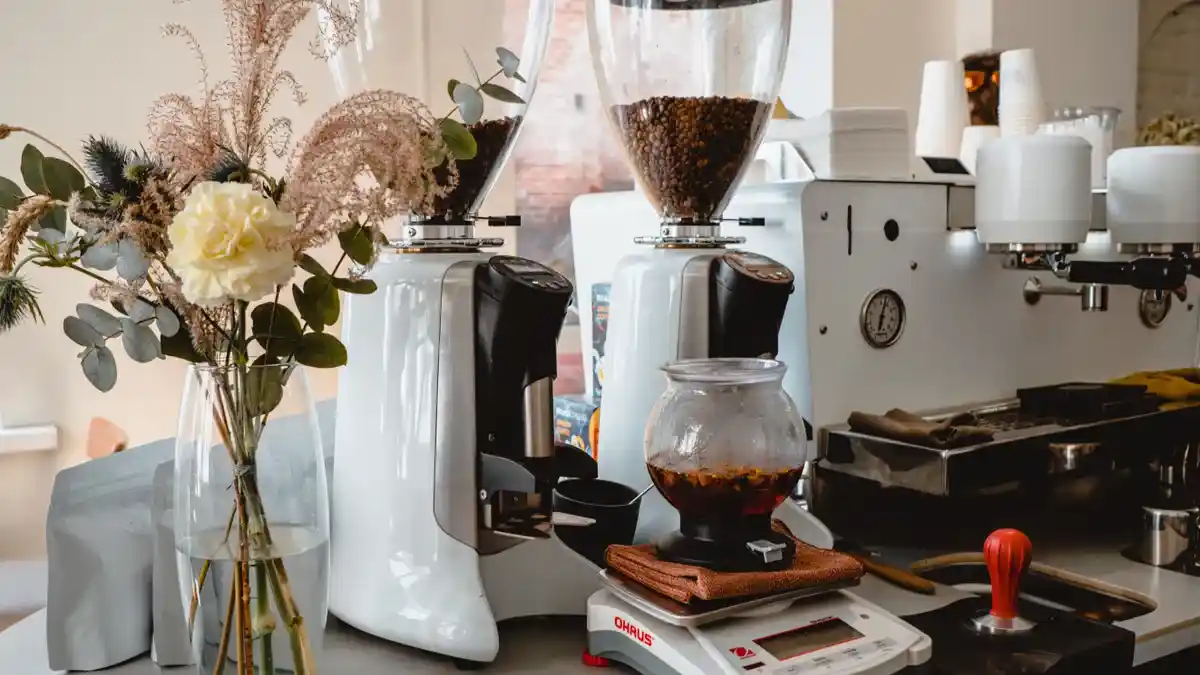
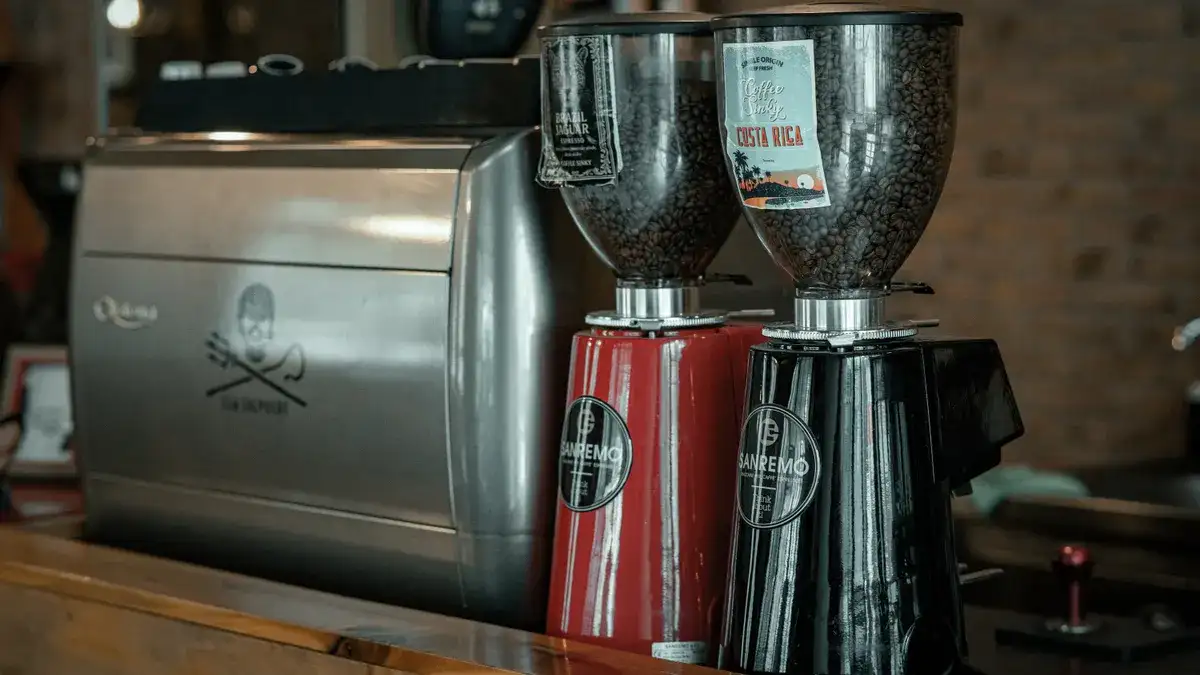
Overall, the best pairing is the one that matches control level, burr design, and workflow, not the one with the flashiest badge. For a home setup, the useful comparison is usually stepless versus stepped, flat burrs versus conical burrs, and single dosing versus hopper grinder. Burr diameter also matters: 54 mm, 64 mm, and larger sizes often sit in different classes of consistency and speed.
Pairing typeWho it suitsWhat it does wellWhat to skip
Stepless grinder with micrometric adjustmentPeople dialing espresso often and wanting fine controlLets the grind move in tiny increments as the shot changesSkip if you want fixed clicks and quick, casual use
Flat burr grinderPeople who want tighter particle control and a cleaner grind profileHelps reduce broad particle spreadSkip if you need the simplest, most forgiving workflow
Conical burr grinderPeople who want a common home-espresso format with flexible useOften easier to live with day to daySkip if you expect it to mimic a lab-style grind profile
Single-dose grinderPeople who change beans often or care about freshness in a 1-bean routineCuts down on stale grounds in the retention chamberSkip if you want a filled hopper and fast repeated drinks
Hopper grinderPeople making several drinks in a rowSpeeds workflow and suits routine useSkip if you rotate beans a lot or dislike retained grounds
Therefore, burr diameter matching is the part many people miss. A machine with stable brew control does not need the biggest burrs on the shelf, but it does need a grinder that can keep consistency at espresso range. A 64 mm burr set can be a practical middle ground in many home contexts, while larger burrs may bring more speed and refinement at the cost of size, heat, or price pressure. The right answer is not “largest possible.” It is “large enough and precise enough for the machine’s level of control.”
What should I check before buying a grinder?
Because the grinder should let the espresso machine show its strengths in the cup, that starts with three checks: adjustment, retention, and burr style. If the machine uses espresso baskets that expect tight grind control, a stepped grinder with wide gaps can become the limiting factor.
First, check whether the adjustment is stepless or finely stepped. For espresso, the difference between one click and the next may be too large on some grinders. A micrometric system is useful when the shot needs a 1-small-step change, not a broad jump. That matters when dialing in around a 58 mm basket or when a new bean behaves differently from the last one.
Second, check the retention chamber. If the grinder holds a lot of old coffee, the first dose after a bean change may not reflect the new coffee at all. That is especially relevant for single dosing, where freshness and bean-to-bean switching matter more than speed. Hopper grinders can be the better fit if several drinks need to go out in a row.
Third, check the burr type and diameter together, not separately. Flat burrs and conical burrs do different things to the particle mix, and a 54 mm grinder is not the same kind of tool as a 64 mm one even before brand differences enter the picture. The machine’s temperature stability, pump control, and basket size all matter less than the grinder if the grind itself is inconsistent.
For a quick outside reference on espresso preparation standards, the Specialty Coffee Association and the European Coffee Brewing Centre are useful names to know, even if the exact model choice stays personal. Those standards do not choose the grinder for you, but they help frame why even particle size and repeatable extraction matter.
For related buying guidance, see how to choose a home espresso machine and single-dose vs hopper grinder.
When should you stop and choose a different setup?
So the pairing approach stops working when the grinder cannot hold the espresso range the machine asks for. At that point, the bottleneck is not technique; it is the tool match.
Your grinder only changes in big jumps: the machine may be capable of better shots than the grinder can support — move to a stepless or finer micrometric model. The retention chamber keeps a noticeable amount of old grounds: stale coffee will keep mixing into fresh doses — switch to a lower-retention single-dose setup or accept the hopper workflow. The burr set cannot produce a repeatable espresso grind: uneven particles will make dialing in frustrating — choose a grinder designed for espresso, not a general-purpose one. Bean changes force you to reset from scratch every time: the pairing is too coarse for flexible home use — a more precise adjustment system is the fix. The machine is stable but shots still run harsh or thin at the same settings: the grinder is likely masking the machine’s quality — do not blame temperature control first. You want one grinder for filter and espresso with no compromise: a jack-of-all-grinds setup may underperform at espresso — split the job if espresso matters most.
In particular, this is where generic advice fails. A machine with strong internal temperature control can look impressive on paper, but the grind still decides whether the basket sees a usable range. If the grinder cannot keep up, the pairing is wrong even if each component looks fine alone.
For a closer look at beverage standards and extraction language, the SCA protocols and the ECBC references are useful starting points.
What mistakes do people make most often?
Since the most common mistake is buying the machine first and treating the grinder like an accessory, that usually creates a 1-sided setup where the brew head is capable of more than the grind can deliver. The fix is to treat the grinder as a core part of the brew system, not a side note, and to consult a qualified adviser if the budget or workflow decision affects a medical, financial, or occupational choice.
Another mistake is choosing a stepped grinder with too few fine changes. The consequence is simple: the shot lands between settings and never feels quite right. A stepless grinder pairing solves that by making smaller moves possible.
A third mistake is ignoring burr diameter matching. A small burr grinder can work, but if the machine is giving stable, repeatable conditions, a grinder with more control and a suitable burr set often makes those conditions useful. The wrong alternative is chasing machine upgrades to solve a grind problem.
A fourth mistake is overlooking retention chamber size. That matters more with single dosing, where a few grams of stale coffee can distort the first shot after a bean change. The correct alternative is a grinder style that matches the user’s rhythm.
A fifth mistake is picking conical or flat burrs by reputation alone. Flat burrs are not automatically better, and conical burrs are not automatically easier. The real question is whether the burr shape suits the machine’s level of control and the drink style the user wants.
What does a good pairing look like in practice?
Once the grind changes predictably, the shot responds in small steps, and the machine’s stability shows up in the cup instead of getting buried, a good pairing looks boring in the best way. On a home setup with a 58 mm portafilter, that usually means the grinder can make fine enough changes that one adjustment is meaningful without being dramatic.
Then the simplest sign is that dialing in does not feel like a fight. If a small change in grind, not a huge jump, is enough to recover flow, the grinder is doing its job. If the machine is stable and the grind is repeatable, the cup should become easier to repeat too.
Single dosing and hopper workflow both have valid places. Single dosing fits people who value freshness and bean rotation. Hopper grinders fit people who make several drinks and want less interruption. Neither wins by default. The wrong choice is the one that forces the user to work against the retention chamber, the adjustment range, or the shot rhythm.
Ultimately, the most useful pairing strategy is also the least flashy: match the grinder to the machine’s level of precision, then choose burr type and workflow from there. That keeps the espresso machine and grinder working as one system instead of two expensive parts that never quite line up.
Drafted with AI; not yet reviewed by a person.